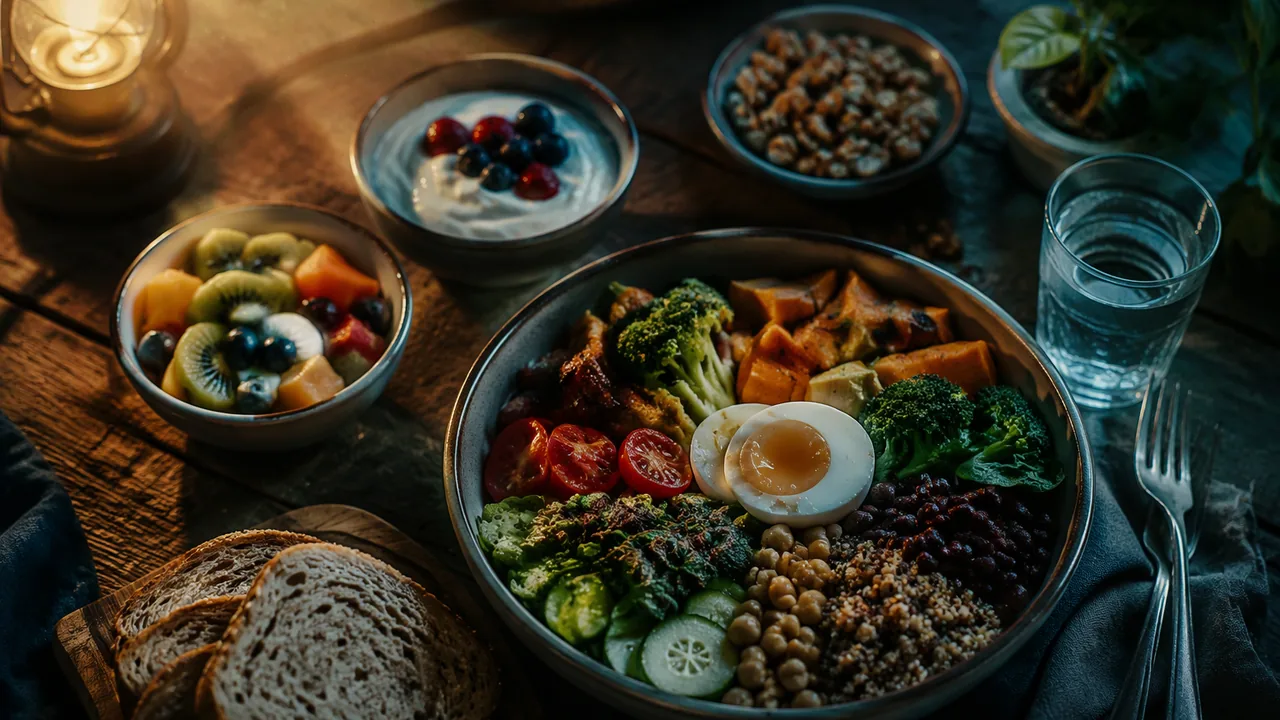
describe how nutrition and exercise together shape body composition, explain energy balance for a growing, active teen, and apply the current Dietary Guidelines to fueling for activity.
Instruction
Food, movement and the body: three connected ideas
Missouri’s grades 9-12 expectation asks you to describe the relationship between nutrition, exercise and body composition. This lesson does that with science, not with a scale. Nobody in this course weighs themselves, measures body fat or shares body information, and nothing here is about changing your size. It is about fueling a growing, active body well.
Nutrition: what the federal guidance says
Federal nutrition advice is set every five years in the Dietary Guidelines for Americans (USDA and HHS). For many years the familiar picture of those guidelines was MyPlate, a plate divided into fruits, vegetables, grains and protein foods with a cup for dairy. The current edition, Dietary Guidelines for Americans, 2025-2030, released in January 2026, uses a new food-pyramid graphic, but the food groups are the same and its core message is “eat real food.” Its main points include:
- Build meals on whole, nutrient-dense foods: protein foods, dairy, vegetables, fruits, healthy fats and whole grains.
- For a 2,000-calorie pattern: about 3 servings of vegetables, 2 of fruit, 3 of dairy and 2-4 of whole grains a day, adjusted to your own energy needs.
- Choose water or unsweetened drinks; avoid sugar-sweetened beverages, including sodas, fruit drinks and energy drinks.
- Limit highly processed foods, added sugars and refined carbohydrates.
- On adolescence specifically: it is “a rapid growth period with increased needs for energy, protein, calcium, and iron,” and calcium and vitamin D are vital for peak bone mass.
Energy balance, explained without weighing anyone
Food provides energy, measured in calories. The body spends energy in three ways: keeping you alive at rest (breathing, heartbeat, brain, growth), digesting food, and moving. Energy balance is the relationship between energy in and energy out. The Dietary Guidelines say plainly that “the calories you need depend on your age, sex, height, weight, and level of physical activity,” so there is no single correct number, and teenagers who are growing and training need more energy, not less. When energy in falls well short of what an active, growing body uses, the warning signs show up in performance and health: tiredness, poor concentration, slower recovery, getting sick more often, and in the long run weaker bones. You read your energy balance through how you feel and perform, not through a scale: steady energy across the day, good sleep, recovering between sessions and improving in training.
The fuels for exercise
| Nutrient | Main job in activity | Food examples |
|---|---|---|
| Carbohydrate | Main fuel for moderate and hard exercise; stored in muscle and liver as glycogen | Whole grains, fruit, potatoes, beans, milk |
| Protein | Repairs and builds muscle after training; spread across meals | Eggs, poultry, fish, meat, beans, lentils, dairy, nuts, soy |
| Fat | Fuel for long, easy activity; carries some vitamins | Nuts, seeds, olive oil, avocado, fish |
| Water | Cools the body through sweat; carries nutrients and oxygen | Water, milk, fruit and vegetables |
Recall Lesson 3.1: aerobic respiration can burn both glucose and fat, but anaerobic glycolysis can use only glucose, so hard intervals depend on carbohydrate.
Body composition
Body composition describes what the body is made of: lean mass (muscle, bone, organs and water) and fat mass. Some fat is essential: it stores energy, protects organs and is needed for hormones. Healthy bodies come in many shapes and sizes, and composition changes naturally during the teen years. Exercise and nutrition shape composition together: muscle-strengthening work with enough protein and energy builds muscle; bone-strengthening activity such as jumping, with enough calcium and vitamin D, builds bone during the years when bone density increases most; aerobic activity builds a stronger heart and better endurance. Notice that a bathroom scale cannot tell muscle from fat or bone, which is one reason this course measures fitness, never body size.
A note for everyone. If you are worried about your eating, your body image or how you feel about food or exercise, or you are worried about someone else, talk with a parent or guardian or your doctor. These concerns are common and help works. If you ever feel in crisis, call or text 988 (Suicide and Crisis Lifeline).
Formative check
Work through these before moving on. They are not graded — they tell you whether the standard below has landed yet.
Which statement about energy balance for an active 15-year-old is accurate?
A bathroom scale can tell you how much of your body is muscle and how much is fat.
A student starts strength training 3 days a week and eats regular meals with protein foods and dairy. Over months, which change in body composition is most likely?
Carbohydrate
Tap to revealMain fuel for moderate and hard exercise; stored as glycogen
Protein
Tap to revealRepairs and builds muscle; spread across meals
Fat
Tap to revealFuel for long, easy activity; essential in the body
Water
Tap to revealCools you through sweat; carries nutrients and oxygen
Calcium and vitamin D
Tap to revealVital for peak bone mass during adolescence
Explain in 5-7 sentences how nutrition and exercise work together to shape body composition, using the terms energy balance, lean mass and nutrient-dense. Then write one example day of meals and snacks for a fictional teen who trains after school, showing which food groups fuel the session and which support recovery. Do not include calorie counts or any body measurements.
How confident are you that you can describe how nutrition, exercise and body composition are connected and plan fuel for activity?
Practice
Work these on paper or in your notebook, then open Check your answer. Aim for all of Fluency and Application; try at least one Challenge.
Printable version: this unit’s practice workbook (PDF)
Fluency
Build speed and accuracy with the core skill.
- Define energy balance and name the three ways the body spends energy.
Check your answer
Answer: Energy balance is the relationship between the energy taken in from food and drink and the energy the body uses. The body spends energy keeping you alive at rest (breathing, heartbeat, brain, growth), digesting food, and moving.Calorie needs depend on age, sex, height, weight and activity, so there is no single correct number. - Match each nutrient to its main job in activity: carbohydrate, protein, fat, water.
Check your answer
Answer: Carbohydrate: main fuel for moderate and hard exercise (stored as glycogen). Protein: repairs and builds muscle after training. Fat: fuel for long, easy activity and carries some vitamins. Water: cools the body through sweat and carries nutrients and oxygen.From the lesson’s fuels table. - Define lean mass and fat mass, and give two reasons some body fat is essential.
Check your answer
Answer: Lean mass is everything other than fat: muscle, bone, organs and water. Fat mass is the body’s fat. Some fat is essential because it stores energy, protects organs and is needed for hormones (any two).Healthy bodies come in many shapes and sizes.
Application
Use the skill in context. Show your reasoning.
- The Dietary Guidelines describe adolescence as a rapid growth period with increased needs for which four things? Name one food source for two of them using the lesson’s tables.
Check your answer
Answer: Energy, protein, calcium and iron. Examples: protein from eggs, poultry, fish, beans, lentils, dairy, nuts or soy; calcium from dairy (milk, yogurt); energy from whole grains, fruit and potatoes.Calcium and vitamin D are also vital for peak bone mass. - An example teen, Sam, trains hard after school but often skips lunch. List four warning signs from the lesson that his energy in may be falling short, and explain how he can read his energy balance without a scale.
Check your answer
Answer: Warning signs (any four): tiredness, poor concentration, slower recovery, getting sick more often, and in the long run weaker bones. He reads his balance through how he feels and performs: steady energy across the day, good sleep, recovering between sessions and improving in training.Growing, training teens generally need more energy, not less. - Explain how each type of activity, paired with nutrition, shapes body composition: (a) muscle-strengthening; (b) bone-strengthening; (c) aerobic.
Check your answer
Answer: (a) Muscle-strengthening work with enough protein and energy builds muscle. (b) Bone-strengthening activity such as jumping, with enough calcium and vitamin D, builds bone during the years when bone density increases most. (c) Aerobic activity builds a stronger heart and better endurance.Exercise and nutrition shape composition together. - Explain why hard intervals depend on carbohydrate, recalling the energy systems from Lesson 3.1.
Check your answer
Answer: Aerobic respiration can burn both glucose and fat, but anaerobic glycolysis can use only glucose. Hard intervals lean on anaerobic glycolysis, so they depend on carbohydrate (glucose and stored glycogen).This is why carbohydrate is the main fuel for moderate and hard exercise.
Challenge
Stretch problems. Expect to think before you write.
- Give two reasons from the lesson why this course measures fitness rather than body size.
Check your answer
Answer: A bathroom scale cannot tell muscle from fat or bone, so it does not describe body composition; and the lesson’s goal is fueling a growing, active body well, not changing size. Body composition also changes naturally during the teen years, and healthy bodies come in many shapes and sizes.A strong answer uses the scale limitation plus the fueling-not-size purpose.
Review
Keep earlier skills sharp.
- Review (Lesson 1.1): body composition is in which fitness family, and what is it defined as?
Check your answer
Answer: Health-related fitness. It is the proportion of the body that is fat compared with muscle, bone and other tissue.Unit 1 promised that Unit 4 would show how activity and nutrition affect it.