How does the structure of a market shape the choices available to consumers and the incentives for businesses?
compare market structures from perfect competition to monopoly, explain how domestic and international competition affect quality, quantity and price, and explain profit as the entrepreneur’s incentive.
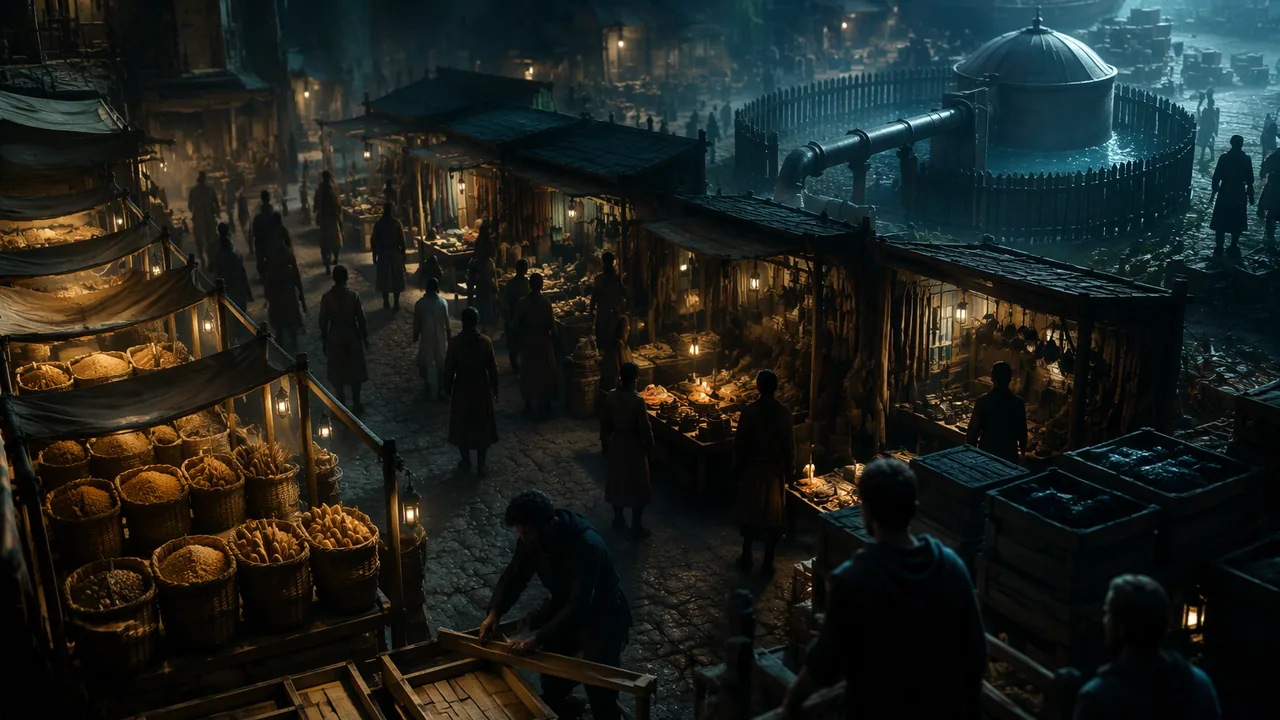
Supply and demand describe markets from a distance. Up close, markets are made of firms — and how many firms there are, and how hard they compete, changes what consumers get.
Market structure, ranging from perfect competition to monopoly, fundamentally determines prices, quality, quantity, and innovation, while profit acts as a crucial incentive for entrepreneurs and a signal for resource allocation.
📖 Read for this lesson
The reading opens over the lesson; close it to come back to exactly where you were. The checks below draw on it.
How might the degree of competition in a market influence your purchasing decisions for everyday goods?
Which market is closest to an oligopoly?
Market structures
The term ‘antitrust’ originated in the late 19th century from the practice of large corporations forming ‘trusts’ to control entire industries and stifle competition.
Economists describe a spectrum. Perfect competition: many firms selling identical products, none able to affect the price — close to real in some farm markets, such as wheat. Monopolistic competition: many firms selling differentiated products — restaurants, clothing brands — each with a little power over its own price. Oligopoly: a few large firms whose decisions affect one another — airlines, wireless carriers, many refining markets. Monopoly: a single seller with no close substitutes, often protected by barriers to entry such as patents, control of a key resource, or large fixed costs, as in local water or electricity distribution.
Many sellers of an identical product, none able to affect price.
A market dominated by a few firms whose decisions affect one another.
A single seller of a good with no close substitutes.
In economics, profit is simply revenue minus the money a business spends.
What competition does
More competition generally means lower prices, higher quantity, better quality and more innovation, because firms that fall behind lose customers. Less competition lets firms charge more and produce less. That is why the U.S. has antitrust laws, beginning with the Sherman Act (1890), that prohibit collusion to fix prices and allow the government to block mergers that would substantially lessen competition — Smith’s warning about “a conspiracy against the public” turned into law.
Profit is simply the money a business has left over after paying its basic expenses.
Profit is more comprehensively defined as revenue minus all costs, including the opportunity cost of the owner’s time and money invested in the business.
Classify three Missouri industries by market structure, citing evidence (number of firms, market share, barriers to entry). For one, explain how competition — or its absence — affects price, quantity and quality, and what evidence would test a claim that the market is uncompetitive.
International competition
Imports add competitors to domestic markets. When Japanese automakers entered the U.S. market in the 1970s and 1980s, American consumers gained more reliable, fuel-efficient cars, and U.S. manufacturers were forced to improve quality — while some American workers and communities lost jobs. Competition’s benefits are spread widely among consumers; its costs are often concentrated on particular workers and places. Both are real.
Profit and entrepreneurship
Profit is revenue minus all costs, including the opportunity cost of the owner’s time and money. It is the reward for bearing risk and for organizing resources in ways customers value. An entrepreneur combines land, labor and capital in a new way — a new product, a cheaper process, a new market — and accepts the risk of losing. Most new businesses fail; the prospect of profit is what makes the attempt worthwhile. Profits also signal: high profits draw competitors into a market, which pushes prices down, and losses push firms out, releasing resources for other uses.
Missouri cases
Consider three industries you can research: Missouri’s 87,887 farms (2022 Census of Agriculture), where thousands of growers sell nearly identical grain; the freight railroads that cross the state, where a few large companies own most of the track and a new competitor would need thousands of miles of right-of-way; and electricity distribution, where each utility serves its own territory under the Public Service Commission’s price regulation. RH.11-12.8 asks you to evaluate claims against evidence: when a firm or an official claims a market is or is not competitive, what evidence would test it?
Key terms
Anything that makes it hard for new firms to enter a market.
Law that prohibits collusion and anticompetitive mergers.
Practice
Work these on paper or in your notebook, then open Check your answer. Aim for all of Fluency and Application; try at least one Challenge.
Printable version: this unit’s practice workbook (PDF)
Fluency
Build speed and accuracy with the core skill.
- Classify each market: (a) wheat farming; (b) neighborhood restaurants; (c) wireless carriers; (d) local water supply.
Check your answer
Answer: (a) perfect competition (close to it); (b) monopolistic competition; (c) oligopoly; (d) monopoly (usually regulated)Count the sellers and ask how alike the products are. - A shop owner has revenue of $180,000 and pays $120,000 in costs. She gave up a $55,000 salary elsewhere and could earn 5% on the $40,000 of savings she put in. Find accounting profit and economic profit.
Check your answer
Answer: Accounting profit $60,000; economic profit $3,000Economic profit also subtracts opportunity costs: 60,000 − 55,000 − 2,000. - Name three barriers to entry.
Check your answer
Answer: Any three: patents, control of a key resource, large fixed costs, network effects, licensingBarriers let a few firms, or one, keep competitors out. - What does the Sherman Act (1890) prohibit?
Check your answer
Answer: Collusion to fix prices and other agreements that restrain trade; it also underlies blocking mergers that would substantially lessen competitionAntitrust law puts Smith’s warning into law.
Application
Use the skill in context. Show your reasoning.
- A Kansas City food truck takes in $96,000 a year and spends $71,000 on food, fuel, permits and a helper. The owner could earn $30,000 a year managing a restaurant. Is the truck profitable in the economic sense? What should the owner consider?
Check your answer
Answer: Accounting profit $25,000, but economic profit −$5,000: the truck earns less than the best alternative. The owner might stay for independence or expected growth — nonmonetary incentives — but should know the cost.Subtract the opportunity cost of the owner’s time. - In an illustrative local market for boba tea, Qd = 2,000 − 50P and Qs = −400 + 70P (drinks a day). High profits draw new shops, and supply becomes Qs = −100 + 70P. Find both equilibria and explain what profit did.
Check your answer
Answer: Before: P = $20.00, Q = 1,000. After: P = $17.50, Q = 1,125. Profit drew entry; supply shifted right, lowering price and raising quantity.2,400 = 120P, then 2,100 = 120P. - Illustrative market shares for the four largest meatpackers buying hogs in a region: 28%, 22%, 18%, 14%, with the rest spread among small firms. What is the four-firm concentration ratio, and what market structure does it suggest? What evidence would test a claim that the market is uncompetitive?
Check your answer
Answer: 82% — an oligopoly. Evidence: margins between the hog price and the pork price compared with other regions, price moves after a plant closes, barriers to entry such as the cost of a new plant, and signs of coordinated pricing.Add the four largest shares. - When Japanese automakers entered the U.S. market, suppose (illustrative) prices fell $1,500 on 500,000 cars a year, and 8,000 U.S. auto jobs were lost. How much did buyers save in a year, and why are the costs harder to see than the benefits?
Check your answer
Answer: $750,000,000 a year for buyers. The gain is spread thinly across many buyers; the losses fall heavily on particular workers and communities.1,500 × 500,000.
Challenge
Stretch problems. Expect to think before you write.
- A student starts a phone-case business: fixed costs $3,000 a month, price $12, and $5 of materials per case. How many cases a month to break even on accounting costs? If she counts the $2,500 a month she could earn elsewhere, how many for zero economic profit?
Check your answer
Answer: 428.6 → 429 cases; with the opportunity cost, 785.7 → 786 casesEach case contributes $12 − $5 = $7. Divide the costs to cover by $7 and round up. - A platform company says: “Our market is competitive — anyone can build an app.” What evidence would test this claim?
Check your answer
Answer: Market shares over time; whether rivals have entered and survived; switching costs and network effects that keep users; prices and quality compared with markets that have more rivals; and whether the firm buys up potential competitors.A claim about competition is positive and testable.
Review
Keep earlier skills sharp.
- Qd = 600 − 20P and Qs = −150 + 30P. Find equilibrium.
Check your answer
Answer: P = 15, Q = 300750 = 50P. - A drought reduces supply. What happens to price and quantity?
Check your answer
Answer: Price rises; quantity fallsSupply shifts left.
Missouri’s 87,887 farms sell nearly identical grain in a market no single grower can move, while a new freight railroad would need thousands of miles of right-of-way, so competition works very differently across the state’s industries.
When assessing a claim that a market is or is not competitive, what specific types of evidence would you look for to support or refute it?
How confident are you that you can classify a market’s structure and explain how competition shapes what consumers get?
The Shift
- Market structures vary from many to few sellers.
- Competition influences prices, quality, and innovation.
- Profit motivates entrepreneurs and guides markets.
Four Market Structures and Four Missouri Industries
SLS original, with the Sherman Act as enacted (15 U.S.C. sections 1 and 2; public domain) and data retrieved November 5, 2026 from the USDA 2022 Census of Agriculture (Missouri), the Missouri Department of Transportation 2022 State Freight and Rail Plan, the Energy Information Administration Missouri State Electricity Profile 2024, the BLS Quarterly Census of Employment and Wages (Missouri, 2025) and the Revised Statutes of Missouri (sections 386.800, 393.130, 393.170) · SLS original
Why this reading. Your task is to classify three Missouri industries by market structure citing evidence — number of firms, market share, barriers to entry — and then say what evidence would test a claim that a market is uncompetitive. Guessing from intuition will not meet that bar, so this reading supplies four industries with the actual counts and shares from government sources, the text of the antitrust statute, and a list of the evidence an economist would ask for. What to look for: for each industry, the three numbers that decide the classification. Notice that two of the four are decided almost entirely by barriers to entry rather than by how many firms exist today.
1. The spectrum, and the tests that place an industry on it
| Structure | Sellers | Product | Control of price | Entry |
|---|---|---|---|---|
| Perfect competition | Very many | Identical | None: price takers | Easy |
| Monopolistic competition | Many | Differentiated | A little, over its own variety | Easy |
| Oligopoly | A few | Identical or differentiated | Some; each firm’s choices affect the others | Hard |
| Monopoly | One | No close substitute | Large, unless regulated | Blocked |
Three questions place an industry: How many sellers, and how large is the biggest? How alike are the products? How hard is it for a new firm to enter? A fourth number economists use is the concentration ratio, the combined market share of the largest few firms.
2. What the law says
The Sherman Act (1890), as codified at 15 U.S.C. § 1, begins:
“Every contract, combination in the form of trust or otherwise, or conspiracy, in restraint of trade or commerce among the several States, or with foreign nations, is declared to be illegal.”
Section 2 (15 U.S.C. § 2) adds that “Every person who shall monopolize, or attempt to monopolize, or combine or conspire with any other person or persons, to monopolize any part of the trade or commerce among the several States, or with foreign nations, shall be deemed guilty of a felony.” Smith’s warning that people of the same trade conspire against the public has been turned into law. Notice what the Act does not do: it does not forbid being large, or being the only seller. It forbids agreements that restrain trade and conduct aimed at monopolizing.
3. Industry one — Missouri farms: close to perfect competition
The 2022 Census of Agriculture (USDA National Agricultural Statistics Service) counted 87,887 farms in Missouri, with 27,026,243 acres — an average of 308 acres a farm. Farms sold $14.70 billion of products that year: $7.86 billion of crops and $6.84 billion of livestock and livestock products (53.5 percent and 46.5 percent).
| Crop (2022) | Farms growing it | Acres harvested | Production |
|---|---|---|---|
| Corn for grain | 11,665 | 3,015,286 | 467,281,181 bushels |
| Soybeans for beans | 16,167 | 5,744,995 | 250,610,723 bushels |
Classification. Thousands of growers sell an almost identical product — a bushel of number 2 yellow corn is a bushel of corn — and none of them can move the market price. Entry is easy in principle (anyone with land and equipment can plant), though land is expensive. That is as close to perfect competition as the real economy gets. The caution: the farm is competitive, but the firms that buy grain, process meat or sell seed and fertilizer may be few, and that is where an economist would look for market power.
4. Industry two — freight railroads: oligopoly
MoDOT’s 2022 State Freight and Rail Plan counts the track that each large (“Class I”) railroad owns or has operating rights over in Missouri, from the Bureau of Transportation Statistics’ North American Rail Lines data (2020). Miles in Missouri, with each railroad’s share of the Class I total of 4,671 miles:
| Class I railroad | Miles of track in Missouri | Share of Class I miles |
|---|---|---|
| BNSF Railway | 1,952 | 41.8% |
| Union Pacific Railroad | 1,533 | 32.8% |
| Norfolk Southern | 579 | 12.4% |
| Kansas City Southern Railway | 473 | 10.1% |
| Canadian Pacific | 133 | 2.8% |
| CSX | 1 | 0.0% |
| Class I total | 4,671 | 100% |
The plan notes that Kansas City and St. Louis are the nation’s second- and third-largest rail hubs after Chicago, and that rail carries the largest share (43 percent) of freight moving to, from and through Missouri. Two railroads — BNSF and Union Pacific — hold 74.6 percent of the Class I miles. (This is a mileage share, a proxy; a true market share would use freight revenue or tons. Summing the squares of the shares as a rough Herfindahl-style index gives about 3,088, where 10,000 would be a monopoly.)
Classification. A few large firms whose decisions affect one another; a product (hauling freight) that is much alike across firms; and a huge barrier to entry, because a new competitor would need thousands of miles of right-of-way. Where two railroads serve a shipper, they compete; where only one does, a shipper has no alternative and the market looks closer to a monopoly. That the 2022 plan lists six Class I railroads and MoDOT’s current page lists five (BNSF, CPKC, CSX, Norfolk Southern and Union Pacific) shows how quickly a merger changes a count: the plan states that Canadian Pacific completed its acquisition of Kansas City Southern in December 2021, forming Canadian Pacific Kansas City.
5. Industry three — electricity distribution: regulated monopoly
The Energy Information Administration lists Missouri’s five largest retailers of electricity in 2024, with their sales in megawatthours and share of the state total of 77,776,034:
| Retailer | Type | Sales (MWh) | Share of state sales |
|---|---|---|---|
| Union Electric Co | Investor-owned | 30,764,248 | 39.6% |
| Evergy Missouri West | Investor-owned | 8,510,700 | 10.9% |
| Evergy Metro | Investor-owned | 8,284,559 | 10.7% |
| Empire District Electric Co | Investor-owned | 4,220,138 | 5.4% |
| City Utilities of Springfield | Public | 3,076,381 | 4.0% |
| Top five | 54,856,026 | 70.5% |
Altogether the state had five investor-owned entities serving 2,087,447 customers, 84 public entities (municipal and similar) serving 455,559, and 42 cooperatives serving 804,310; investor-owned utilities made 66.6 percent of retail sales.
Why the concentration ratio misleads here. These companies do not compete with one another for the same customers. Each serves its own territory, and the statutes build the wall: RSMo § 393.170.1 provides that “No gas corporation, electrical corporation, water corporation or sewer corporation shall begin construction of a gas plant, electric plant, water system or sewer system, other than an energy generation unit that has a capacity of one megawatt or less, without first having obtained the permission and approval of the commission”; the title of § 386.800 refers to the “assignment of sole service territories.” Poles and wires have large fixed costs, so one network serving a territory is cheaper than two — a natural monopoly. In exchange, the Public Service Commission regulates the price: § 393.130.1 requires that all charges “shall be just and reasonable and not more than allowed by law or by order or decision of the commission.”
Classification. A monopoly in each territory, protected by law and by cost, with price regulated rather than competed. Here it is the barrier to entry, not the share, that classifies the industry.
6. Industry four — limited-service restaurants: monopolistic competition
The Quarterly Census of Employment and Wages (BLS) counts private-sector establishments by industry. In 2025, Missouri had:
| Industry (NAICS) | Establishments | Employment | Average annual pay |
|---|---|---|---|
| Limited-service restaurants (722513) | 4,790 | 90,921 | $22,094 |
| Full-service restaurants (722511) | 4,645 | 97,747 | $28,219 |
That is 19.0 jobs per limited-service establishment on average: thousands of outlets, each small. Classification. Many sellers, differentiated products (a burger is not a taco is not a pizza), little control over price beyond one’s own variety, and easy entry — the market structure the lecture calls monopolistic competition. If a menu item’s price rises too far, customers switch to a close substitute down the road.
7. International competition
MoDOT’s plan notes that the automobile industry is a major employer within Missouri and that vehicles manufactured in the state are often shipped to other states for eventual export. When foreign producers sell in the U.S. market, or Missouri producers sell abroad, each side faces competitors that did not exist when the market was local. Consumers gain from lower prices, better quality and more choice; workers and communities in the industries that lose can bear large, concentrated costs. Both are real, and a complete analysis counts both.
8. Profit and entrepreneurship
Accounting profit is revenue minus the money a business spends. Economic profit also subtracts the opportunity cost of the owner’s time and money. A food-truck owner who clears $25,000 in accounting profit while turning down a $30,000 job has an economic loss of $5,000. High economic profit draws entrants, which pushes price down; losses push firms out, releasing resources to other uses. That signal is why entrepreneurs, who bear the risk of failure, are central to Smith’s account of competition.
9. What evidence would test a claim that a market is uncompetitive?
- Concentration over time: how many firms, and how the largest shares have moved, with the caution that shares mean little if firms serve separate territories (section 5).
- Entry and exit: have new firms entered and survived, or has every entrant failed or been bought?
- Price and margin comparisons: do prices or margins exceed those in comparable markets with more rivals, after allowing for cost differences?
- Price behavior: do prices move together in ways that costs do not explain, or rise after a rival disappears?
- Barriers: licenses, large fixed costs, control of an essential input, switching costs, contracts.
- Regulatory status: a regulated price is not a competitive price, and a report must say which kind it is analyzing.
Sources: USDA NASS, 2022 Census of Agriculture, Volume 1, Chapter 1: State Level Data, Missouri (Table 1 and county tables) (nass.usda.gov); MoDOT, 2022 Missouri State Freight and Rail Plan (modot.org); MoDOT, Freight Profile Volume 2 (Table 2.5, Mileage of Operating Freight Railroads) (modot.org); MoDOT, Freight Railroads (modot.org); EIA, Missouri Electricity Profile 2024 (Tables 3, 8 and 9) (eia.gov); BLS, Quarterly Census of Employment and Wages, Missouri, 2025 annual averages (data.bls.gov); Revised Statutes of Missouri section 393.170, Approval of incorporation and franchises (revisor.mo.gov); Revised Statutes of Missouri section 393.130, Safe and adequate service; charges (revisor.mo.gov); Revised Statutes of Missouri section 386.800, Municipally owned electrical supplier; sole service territories (revisor.mo.gov); Sherman Antitrust Act, 15 U.S.C. sections 1 and 2, Cornell Legal Information Institute (law.cornell.edu)