How are advanced sensors transforming the way artificial intelligence understands and interacts with the physical world?
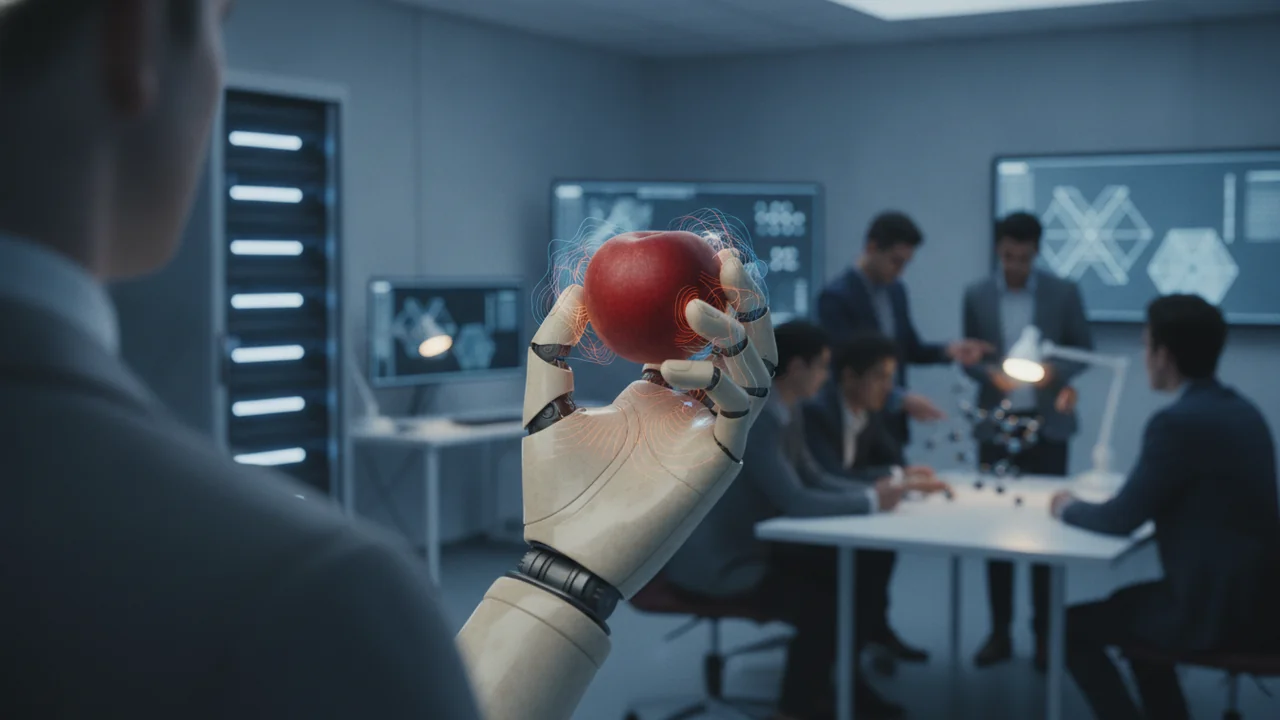
Integrating advanced sensors with AI is revolutionizing how machines perceive their surroundings, enabling new capabilities that were once unimaginable. From self-driving cars to medical diagnostics, sensor-driven AI is expanding boundaries across industries.
Some environmental sensors can detect radiation levels so subtle that they help AI systems monitor nuclear facilities and protect workers from hidden hazards.
- Sensor fusion: Sensor fusion integrates data from multiple sensors to help understand environments. For example, combining inputs from cameras, light detection and ranging (LiDAR), radar, and ultrasonic sensors helps self-driving cars navigate safely.
- Bio-inspired sensors: These sensors mimic biological systems. Artificial skin detects pressure, temperature, and texture, allowing robots to handle delicate objects carefully. Other sensors can identify smells like chemical compounds, aiding in early disease detection and pollutant monitoring. (We tell you more about sensing in the next section.)
- Quantum sensors: Using principles of quantum mechanics, these sensors achieve high precision. They can detect tiny changes in magnetic fields, gravity, and temperature. This is important for advanced medical imaging and navigation in places where GPS doesn’t work well.
- Environmental sensors: These sensors detect events like infrared and ultraviolet light and radiation, enabling AI systems to operate in tough conditions. They are crucial for industrial monitoring and military surveillance.
Want to go deeper? The science behind sensor fusion
Sensor fusion uses advanced algorithms to merge data from multiple sources, reducing uncertainty and improving decision-making. For example, in autonomous vehicles, fusing data from radar, LiDAR, and cameras creates a more accurate map of the environment, compensating for each sensor’s limitations and strengthening overall safety.
Which sensor technology do you think will have the biggest impact on healthcare in the next decade—and why?
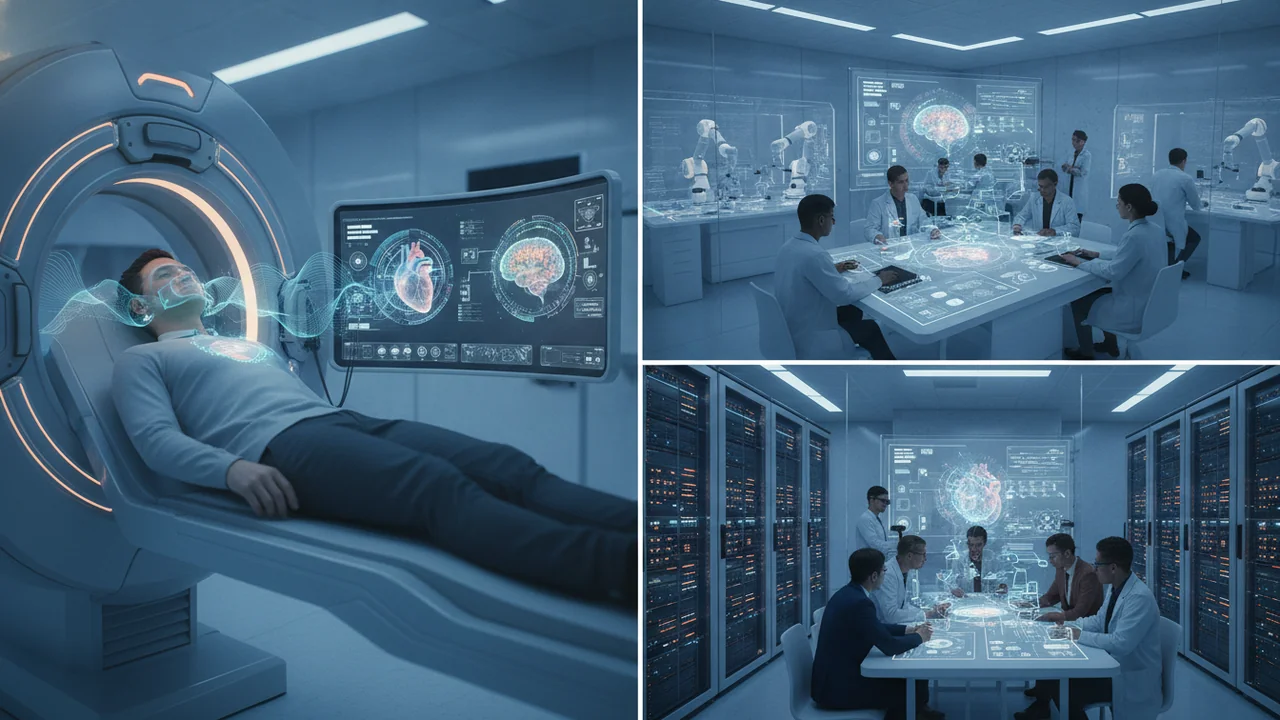
Self-driving vehicles rely on sensor fusion to safely navigate complex streets, combining data from cameras, radar, and LiDAR to detect pedestrians, cyclists, and road hazards in real time.
The process of combining data from multiple sensors to create a unified, more accurate understanding of an environment.
A sensor that uses quantum mechanical properties to achieve extremely high measurement precision, useful in fields like medical imaging and navigation.
- Sensor fusion enables safer navigation for machines by combining multiple sensor types.
- Bio-inspired sensors give robots senses similar to humans, expanding their abilities.
How might environmental sensors change how industries monitor and respond to hazards?
Industrial facilities increasingly deploy environmental sensors to detect leaks, radiation, or chemical spills, letting AI systems trigger alerts and automate emergency protocols before humans are even aware of the danger.
Explore how sensor fusion works in practice.
- Imagine a robot equipped with a camera, ultrasonic sensor, and temperature sensor.
- List what each sensor can detect individually.
- Describe how combining their data could help the robot make better decisions in a kitchen (for example, avoiding hot surfaces or recognizing spilled liquids).
Reflect on a situation in your daily life where multiple forms of sensing could improve safety or efficiency. How might AI use sensor fusion to address this?
What challenges might arise when integrating bio-inspired sensors into machines, and how could AI help solve them?
All sensors provide perfectly accurate data to AI systems, so the machine’s understanding of its environment is always flawless.
No single sensor is perfect—each has strengths and weaknesses. Sensor fusion and advanced AI algorithms are needed to compensate for gaps and improve reliability.
Integrating advanced sensors with AI is now changing how machines interact with the world and expanding what they can do.
Which sensor technology combines data from multiple sources to help AI understand environments more accurately?
Combining advanced sensors with AI enables machines to perceive and interact with the world more effectively, opening up new possibilities across industries.
Sensor fusion is critical for AI-driven systems, as it compensates for the limitations of individual sensors and improves reliability and safety.
The Shift
- Integrating multiple sensors with AI gives machines richer, more accurate perception.
- Bio-inspired and quantum sensors expand the range of what AI can detect and interpret.
- Sensor fusion techniques are essential for reliable and safe operation in complex environments.