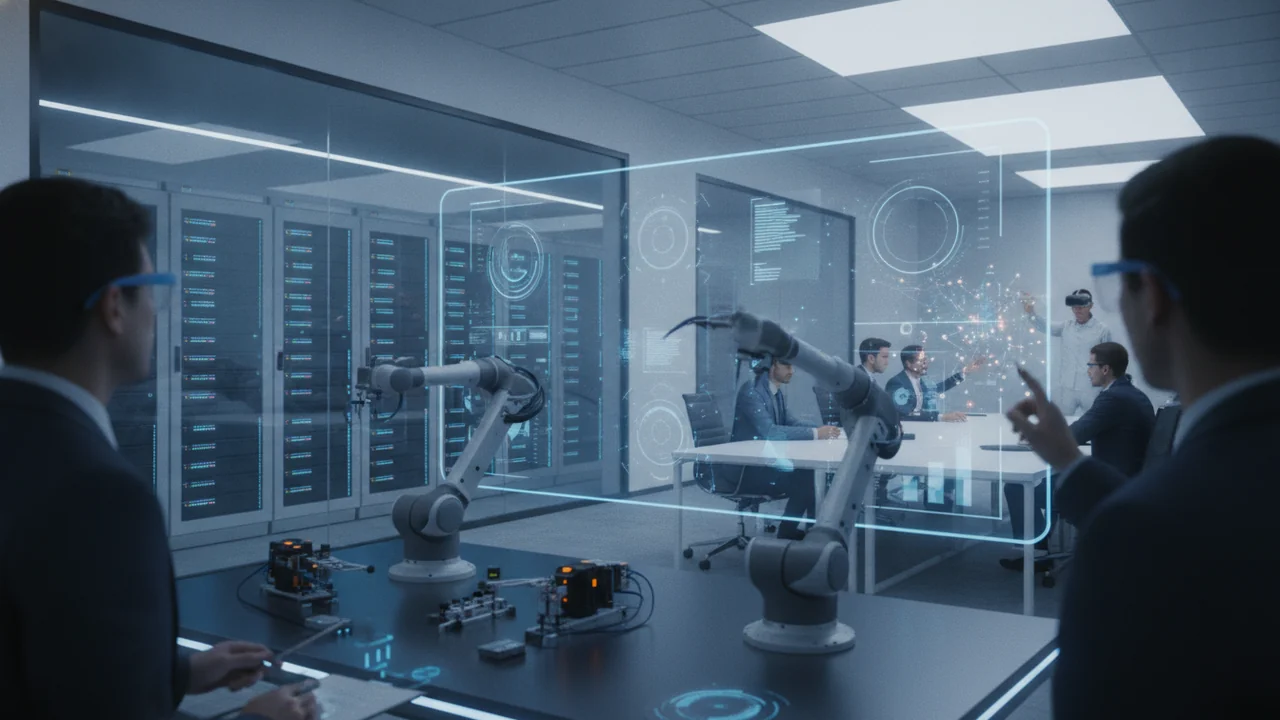
Imagine a world where machines can not only see and hear like humans, but also sense things we cannot—like infrared at night or chemical changes in the air. What new abilities could emerge if artificial intelligence had access to an expanded range of senses?
Some women are tetrachromats, meaning they can perceive up to 100 million colors due to an extra type of retinal cone cell. This is far more than the typical 1 million colors most people can see.
An essential component of AI is the capability of the AI to simulate human intelligence using a full set of senses. Input provided by senses helps humans develop the various kinds of intelligence described in earlier modules. A human’s senses provide the right sort of input to create an intelligent human. Even assuming that it becomes possible for an AI to fully implement all eight kinds of intelligence, it still requires the right sort of input to make that intelligence functional.
Why do you think having the “right sort of input” is just as important as having advanced AI processing capabilities?
Humans typically have five senses with which to interact with the environment: sight, sound, touch, taste, and hearing. Oddly enough, humans still don’t fully understand their own capabilities, so it’s not too surprising that computers lag when it comes to sensing the environment in the same way humans do. For example, until recently, only four elements comprised taste: salt, sweet, bitter, and sour. However, two more tastes now appear on the list: umami and fat. Likewise, some women are tetrachromats, people who can see 100 million colors rather than the more usual 1 million. (Only women can be tetrachromats because of the chromosomal requirements.) Knowing how many women have this capability isn’t even possible yet, though some sources place the number as high as 20 percent.
A condition found in some women where an extra type of cone cell in the eye allows perception of a vastly greater range of colors—up to 100 million, compared to the usual 1 million.
Can you think of other human senses or abilities that are not yet fully understood, and how that might affect efforts to replicate them in AI?
The use of filtered static and dynamic data now enables an AI to interact with humans in specific ways. For example, consider Alexa, the Amazon device that seemingly “hears” you and then says something in response. Even though Alexa doesn’t actually understand anything you say, the appearance of communication is quite addictive and encourages people to anthropomorphize these devices. To perform any part of its task, Alexa requires access to a special sensor: a microphone that allows it to hear. Actually, Alexa has a number of microphones to help it hear well enough to provide the illusion of understanding. Unfortunately, as advanced as Alexa is, it can’t see, feel, touch, or taste anything, which makes it far from human.
Smart home assistants like Alexa use arrays of microphones to localize and recognize speech, but lack visual or tactile sensors—limiting their ability to fully understand or respond to their environment.
Attributing human traits, emotions, or intentions to non-human entities like AI assistants or robots, often because their responses appear lifelike.

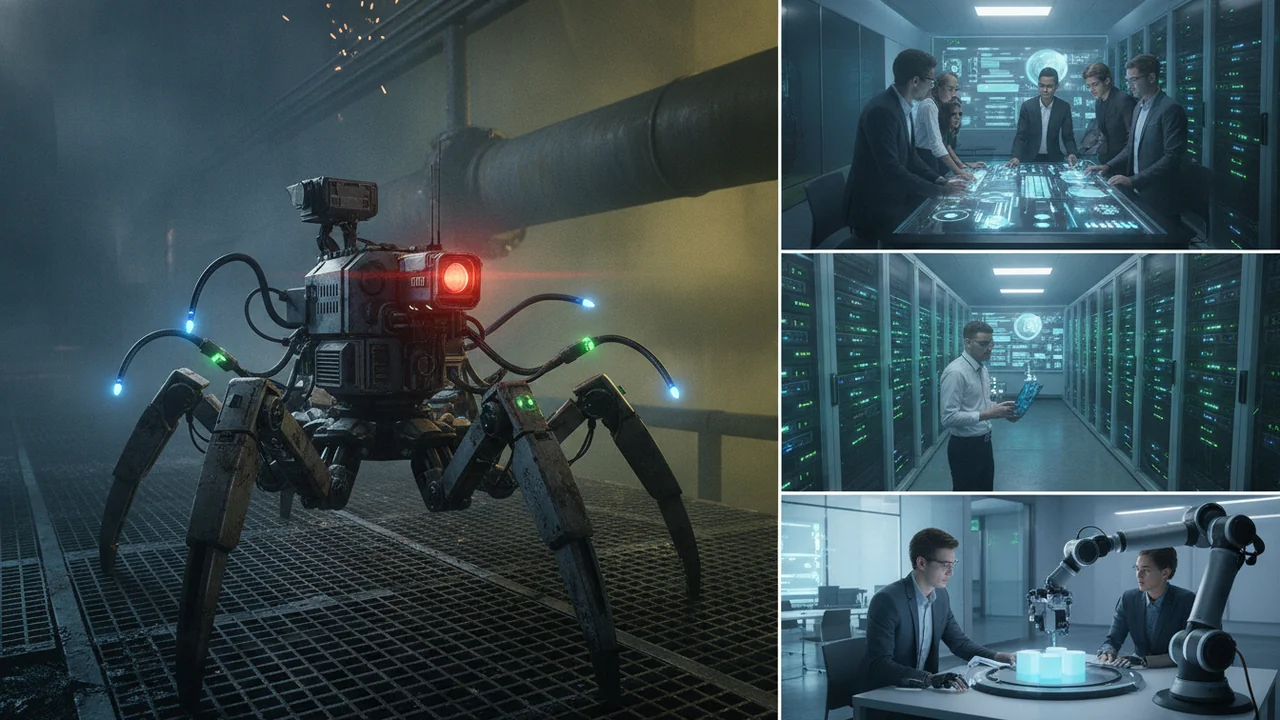
In some cases, humans want their AI to have superior or different senses. An AI that detects motion at night and reacts to it may rely on infrared rather than normal vision. In fact, the use of alternative senses is now one of the valid uses for AI. The capability to work in environments that people can’t work in is one reason that some types of robots have become popular, but working in these environments often requires that the robots have, or be connected to, a set of nonhuman sensors. Consequently, the topic of sensors actually falls into two categories (neither of which is fully defined): human-like and alternative environment.
AI systems can only use sensors that mimic human senses, like sight and hearing.
AI can be equipped with alternative or “superhuman” sensors—such as infrared, ultraviolet, or chemical detectors—allowing it to sense environments or features humans cannot perceive.
Want to go deeper? The science behind alternative sensors in AI
Alternative sensors include devices that can detect phenomena outside the human sensory range, such as infrared (thermal vision), ultraviolet light, radiation, or even volatile chemicals. Robots in hazardous environments—like nuclear plants or deep-sea explorations—often rely on these nonhuman sensors. These sensors produce data that AI can interpret, sometimes leading to entirely new forms of “intelligence” based on abilities humans don’t naturally possess.
Compare the senses of a human, a typical AI assistant (like Alexa), and a robot designed for hazardous environments.
- List the five human senses, plus any additional abilities like tetrachromacy.
- Identify which senses are currently available to AI assistants like Alexa.
- Research and list at least two nonhuman sensors used in robots working in hazardous environments.
- Reflect on how these different sensors change what each system is capable of.
How does adding alternative sensors—beyond human senses—expand the possible roles and environments for AI?
Giving AI access to specialized or alternative sensors—beyond those found in humans—enables machines to operate in environments, and perceive phenomena, that people cannot.
What is the main purpose of adding specialized sensors to AI systems?
Tap to revealTo provide AI with the right kind of input needed to function intelligently—whether by mimicking human senses or creating new, superhuman capabilities.
What is an example of a nonhuman sensor used in AI?
Tap to revealInfrared sensors, which allow AI or robots to detect heat or movement in darkness where humans cannot see.
What does it mean to anthropomorphize an AI device?
Tap to revealIt means to attribute human-like qualities or emotions to a non-human system, like an AI assistant.
- AI needs the right kind of sensory input to function intelligently.
- Alternative sensors enable AI to work in environments and ways humans cannot.
Which of the following is an example of an alternative sensor that can provide AI with capabilities beyond human senses?
AI systems are not limited to human-like senses; by equipping them with alternative sensors, we expand both their usefulness and their ability to perceive the world in novel ways.
Consider a scenario where you could add any new sense—human or nonhuman—to an AI robot. Which would you choose, and how might it change what the robot could do?
The appearance of communication is quite addictive and encourages people to anthropomorphize these devices.