4.18 Revise and Retest
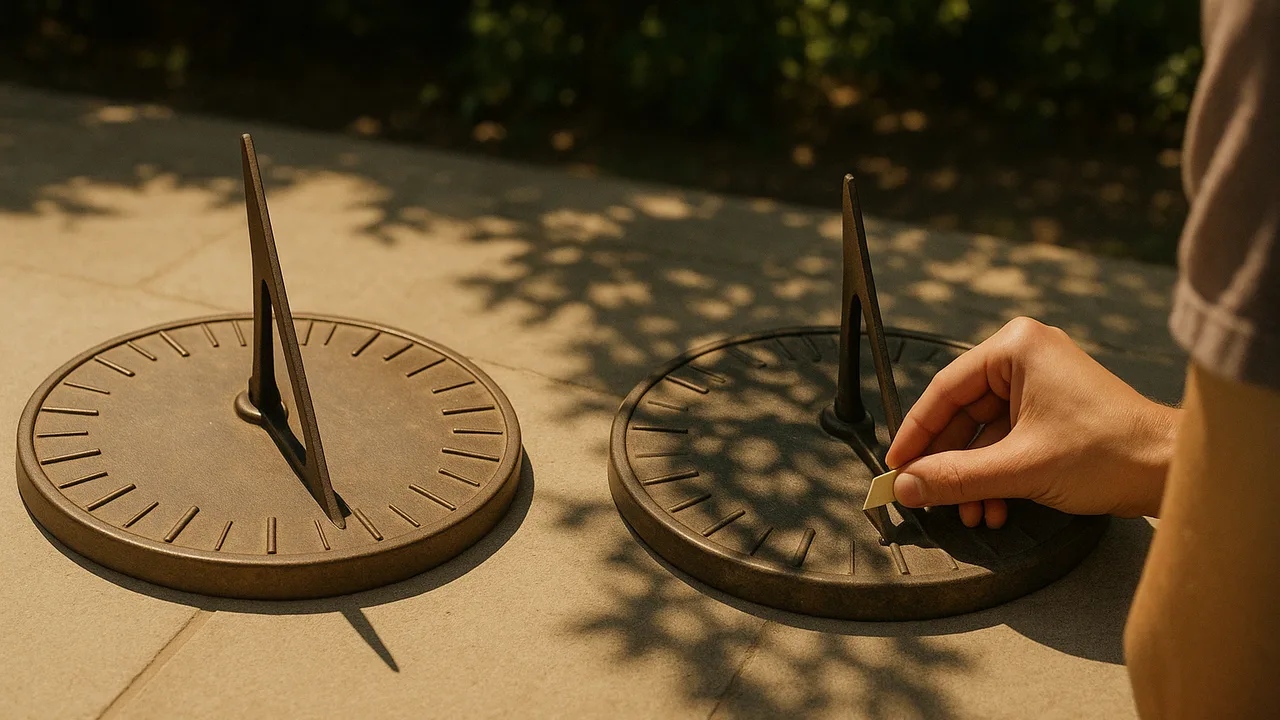
revise a shadow clock using feedback, then test both designs in more than one situation and compare the results.
- I can test each solution in different situations and collect data to see how well it meets the criteria and constraints.
- I can use the data I collected to compare how well each solution meets the criteria and constraints of the problem.
Phase 4: Build
Warm-Up ~5 min
Do Now. Diego’s clock read 11:00 at exactly 11:00 on Monday. Does that prove his clock is accurate? What else should he check?
A shadow clock was calibrated two weeks ago. Will its marks still match the clock today?
Instruction ~10 min
Junior engineers, one good reading is not enough. A design has to work in different situations. For a shadow clock, situations can mean different times of day, different days, or a light wind. We test in each one and write down the results.
Make a fair test. Change one thing at a time. Keep the clock in the same spot, facing the same way. Read the shadow at the same moment you read the real clock. Find the error: how many minutes the shadow clock is off.
Worked example 1: finding the error. At 10:00 by the school clock, Mei’s shadow points one-third of the way from the 10 mark to the 11 mark. One-third of an hour is 20 minutes. So her clock reads 10:20, and the error is 20 minutes fast. These are sample numbers.
Worked example 2: comparing designs. Jamal’s team tests both clocks on three days, one week apart. Sample errors: straight stick 5, 10 and 15 minutes; tilted pointer 5, 5 and 5 minutes. The straight stick’s error grows each week. The tilted pointer stays steady. The data helps them choose.
Guided Exercises ~15 min
Make your one revision first. Then test both clocks and fill in the table.
| Situation | Real clock time | Straight stick reads | Error (min) | Tilted pointer reads | Error (min) |
|---|---|---|---|---|---|
| Morning, calm | |||||
| Midday, calm | |||||
| Fan on low (wind) |
Independent Practice ~10 min
Plan the next test like an engineer.
Name one more situation that families at Night Sky Night might face, such as late afternoon or a breezy evening. Describe how you would test your clock in that situation.
Closure ~5 min
Your clocks have been revised and tested. Next class is the mid-build checkpoint, so review your shadow and gravity ideas.
Exit ticket: right now, which of your two designs is ahead? Give one piece of data.
Teacher notes
Materials: prototypes, a small fan (wind test), rulers, data tables, a big analog clock face for teaching fractions of an hour.
Setup: Run the wind test indoors with a flashlight if needed. Keep calibration and testing on the same side of the March daylight saving switch, or the clocks will look an hour off.
Listen for: “it worked once, so it works.” Ask: “Would it work next week? In wind?” Also check that students read the real clock and the shadow at the same moment.
Support / stretch: Provide a clock face divided into quarters for reading in-between positions. Stretch: ask students to find the average error of each design.