3.07 One Liter of Earth’s Water
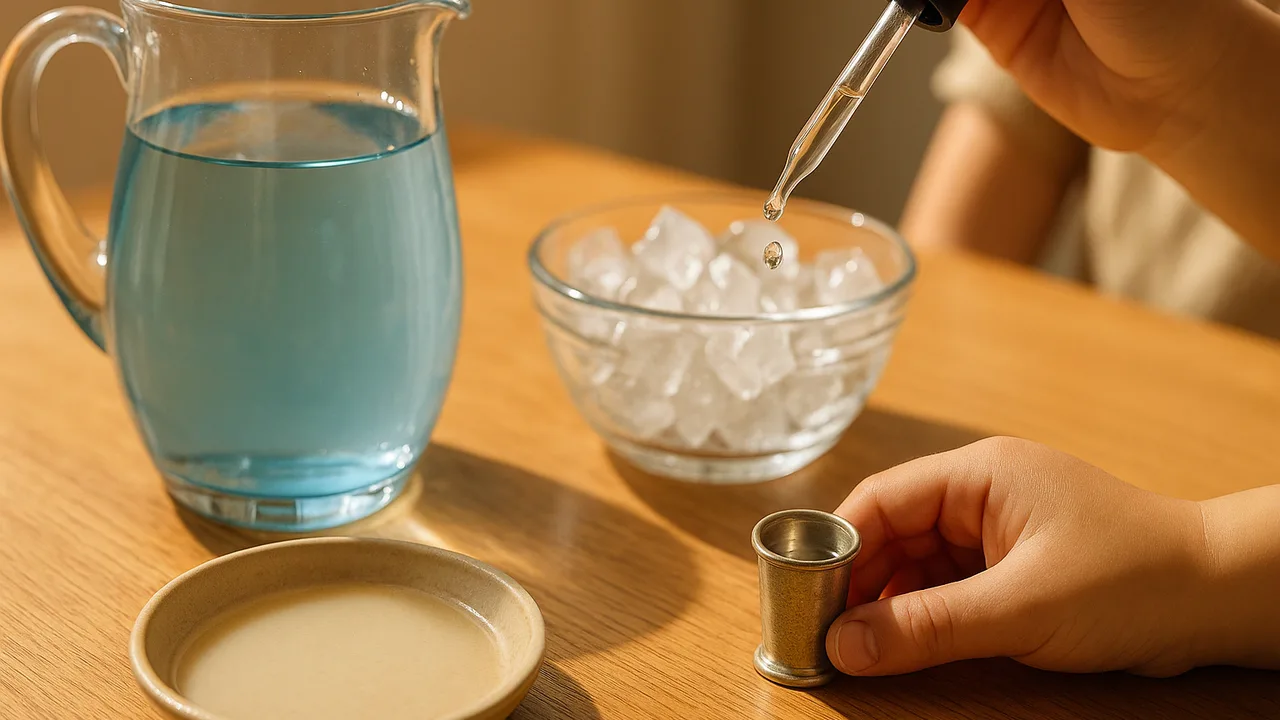
use a one-liter model to measure about how much of Earth’s water is salty, frozen, underground, or in lakes and rivers.
- I can make a graph using data to show how much salt water and fresh water are in oceans, lakes, rivers, glaciers, ground water, and polar ice caps.
- I can use standard units to label and organize my graph of water amounts in these reservoirs.
- I can combine the data to show the total amounts of salt water and fresh water in all the reservoirs on my graph.
Phase 2: Investigate
Warm-Up ~5 min
Do Now. Imagine all the water on Earth poured into one 1-liter bottle. That is 1,000 mL. Guess how much of it is fresh water.
If all of Earth's water fit in 1,000 mL, about how much would be fresh water?
Instruction ~10 min
Creek guardians, today you pour Earth’s water. Scientists estimate where Earth’s water is stored. We will use rounded, approximate amounts and scale them down to one liter. The places where water is stored are called reservoirs.
Our model amounts (all approximate). Out of 1,000 mL:
- Oceans (salt water): about 970 mL
- Glaciers and polar ice caps (fresh, frozen): about 21 mL
- Groundwater (fresh, underground): about 9 mL
- Lakes, rivers and wetlands (fresh): only a few drops, well under 1 mL
Worked example 1: pouring the ocean. Diego’s team fills a 1-liter bottle to the top. They pour 30 mL into a small cup. What stays in the bottle, about 970 mL, is the ocean. They label it “Salt water.”
Worked example 2: splitting the fresh water. Priya’s team takes the 30 mL cup. They pour about 21 mL into an ice-cube tray and label it “Glaciers and ice caps.” They pour about 9 mL into a cup of sand and label it “Groundwater.” A few drops remain. They drip them into a bottle cap labeled “Lakes, rivers and wetlands.”
Look at the cap. Our creek, the big river it feeds and every lake you know are in that tiny cap. That is why our client cares so much.
Guided Exercises ~15 min
Measure out each reservoir with a measuring cup and a dropper. The Recorder fills in this table.
| Reservoir | Salt or fresh? | Model amount (mL, approximate) | What we used to hold it | What surprised us |
|---|---|---|---|---|
| Oceans | ||||
| Glaciers and polar ice caps | ||||
| Groundwater | ||||
| Lakes, rivers and wetlands | ||||
| Total | 1,000 |
Then answer the questions with your team.
Independent Practice ~10 min
Think about the numbers.
Write the four reservoirs in order, from most water to least. Next to each, write salt or fresh and its model amount in mL.
Closure ~5 min
You held Earth’s water in your hands. Next, we turn these amounts into graphs that tell the story clearly.
Exit ticket: what surprised you most about the tiny cap of lakes, rivers and wetlands? Why does it matter to our creek?
Teacher notes
Materials (per team): a clear 1-liter bottle, a measuring cup marked in mL, a small 30 mL medicine cup, an ice-cube tray, a cup with a little sand, a bottle cap, a dropper, masking tape and a marker for labels, a tray.
Facts note: amounts are rounded from widely published estimates: oceans about 97% of Earth’s water; of the fresh water, about 69% ice, about 30% groundwater and about 1% lakes, rivers, wetlands and other surface water. Water in the air is left out, as the 5-ESS2-2 boundary asks. Always say “about.”
Listen for: “Ice isn’t water.” Remind students that glaciers and ice caps are frozen fresh water. Also listen for “so we will run out tomorrow”; the water cycle keeps refilling fresh water, but the share people can easily reach is small.
Support / stretch: Pre-mark the bottle at 970 mL. Stretch: ask what fraction of all the water the 30 mL is (about 3 out of 100).