3.21 Spread the Word: Litter, Runoff and Saving Water
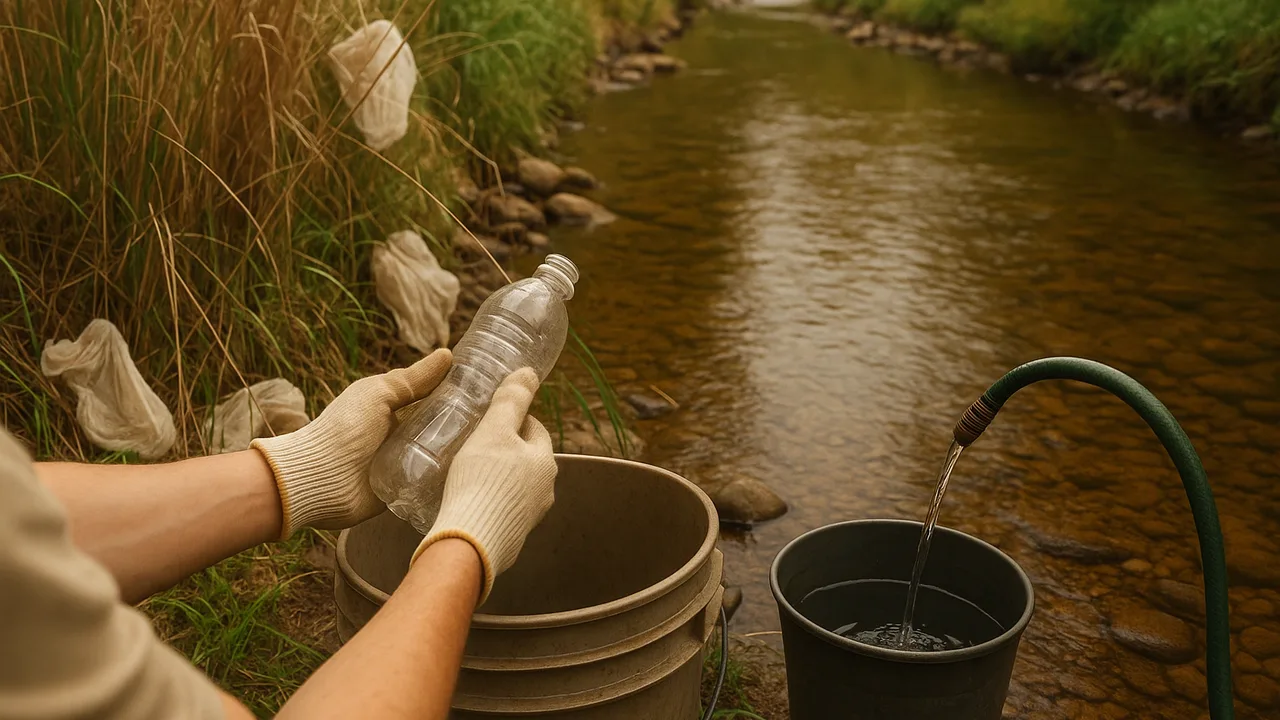
combine information from two or more sources to explain the good and bad effects people have on a creek, and design a campaign that helps our community protect it.
- I can combine information from two or more sources to describe both the positive and negative effects that human activities have on the environment.
- I can combine information from different sources to explain how a community uses science ideas to protect a natural resource and its environment.
- I can find information from books and reliable websites about how a human activity, like farming or using energy, affects Earth’s resources and the environment.
- I can find information about how a community uses science ideas to protect a natural resource and the environment where it is found.
- I can explain how people’s needs and wants can change over time.
Phase 4: Build
Warm-Up ~5 min
Do Now. A storm drain sits by the curb. Many people think it goes to a water treatment plant. In many towns, storm drains flow straight to the nearest creek. What could wash in?
A wrapper is dropped in a parking lot. A storm comes. Where is it most likely to end up?
Instruction ~10 min
Some fixes are about what people do. A rain garden helps one spot. A campaign can change choices in a whole town. Today every team adds a people part to the plan: a litter and runoff campaign or a water-saving plan for school.
Two kinds of effects. People affect water in good ways and bad ways. Litter, oil drips, too much lawn fertilizer and bare soil can pollute a creek. Planting trees, picking up trash, using less water and building rain gardens can protect it. Scientists combine many sources to see both sides.
Worked example 1: combining sources. Source 1, a watershed group fact sheet, says fertilizer washed off lawns can cause too much algae in streams. Source 2, a county website, says many storm drains flow straight to creeks. Combined: “Fertilizer on a lawn can wash into a storm drain, then into the creek, where it feeds too much algae.” One source alone did not tell the whole story.
Worked example 2: saving water at school. Malik’s team noticed a dripping sink and kids leaving taps on while scrubbing hands. Their sources say clean water takes energy and work to treat and pipe to us. Their campaign: report drips to the custodian and turn off the tap while scrubbing. Less clean water used means less to treat and pump.
Needs change over time. Long ago, many towns let factories and sewers dump waste into rivers. As people learned how this harmed water and health, they wanted cleaner rivers. New laws, treatment plants and cleanups followed. Our plan is part of that change.
| Source | Good effect people have | Bad effect people have | What a community can do |
|---|---|---|---|
| Source 1: | |||
| Source 2: | |||
| Combined idea |
Guided Exercises ~15 min
Research and plan your campaign. Use the arrows to move through each step.
Independent Practice ~10 min
On your own, make your campaign piece.
Draft a poster or a 30-second announcement. It must name a problem people need solved, give one science fact with its source, and ask for one action.
🔎 Mini case study: A River That Came Back ~6 min
The Cuyahoga River flows through Cleveland, Ohio, into one of the Great Lakes. For many years, factories and city sewers dumped waste into it. Oil and trash floated on the water. In 1969, the oily surface of the river caught fire. It was not the first fire there, but this time the news spread across the country.
People were shocked that a river could burn. The story helped push the country to pass new laws to protect water. Cities built better sewage treatment plants. Factories had to stop dumping so much waste.
The cleanup took many years, and work still goes on. Scientists kept checking the water. Over time, many kinds of fish returned to parts of the river where few could live before. The Cuyahoga shows that a community can use science, rules and steady work to help a river recover.
Think about it: Which human activities harmed the Cuyahoga, and which actions helped it recover? Name one bad and one good effect.
Closure ~5 min
A plan protects the creek best when it changes both land and people. Next time, you revise your fix and get the plan ready for testing.
Exit ticket: name one negative and one positive effect people have on our creek. Which one does your campaign target?
Teacher notes
Materials: two short sources per team (a watershed group or conservation agency fact sheet, and a county or city stormwater page or a science text); poster paper; markers.
Setup: Check locally whether your town’s storm drains flow directly to streams before stating it as fact; many do, but some older systems send street water and sewage to the same pipes. Never let students put signs on real storm drains without permission from the town.
Listen for: “all people hurt the environment.” Push for both positive and negative effects. Also listen for one-source answers; ask “What did your second source add?”
Support / stretch: Provide a highlighted source with a two-column note sheet. Stretch: find a third source and judge which one is most trustworthy, and why.