1.2 Hand Position and the Buzz Test
position the fretting hand to produce a clean-sounding E-shape barre chord, and use the buzz test to check it.
Build Background & Skills
Warm-Up ~5 min
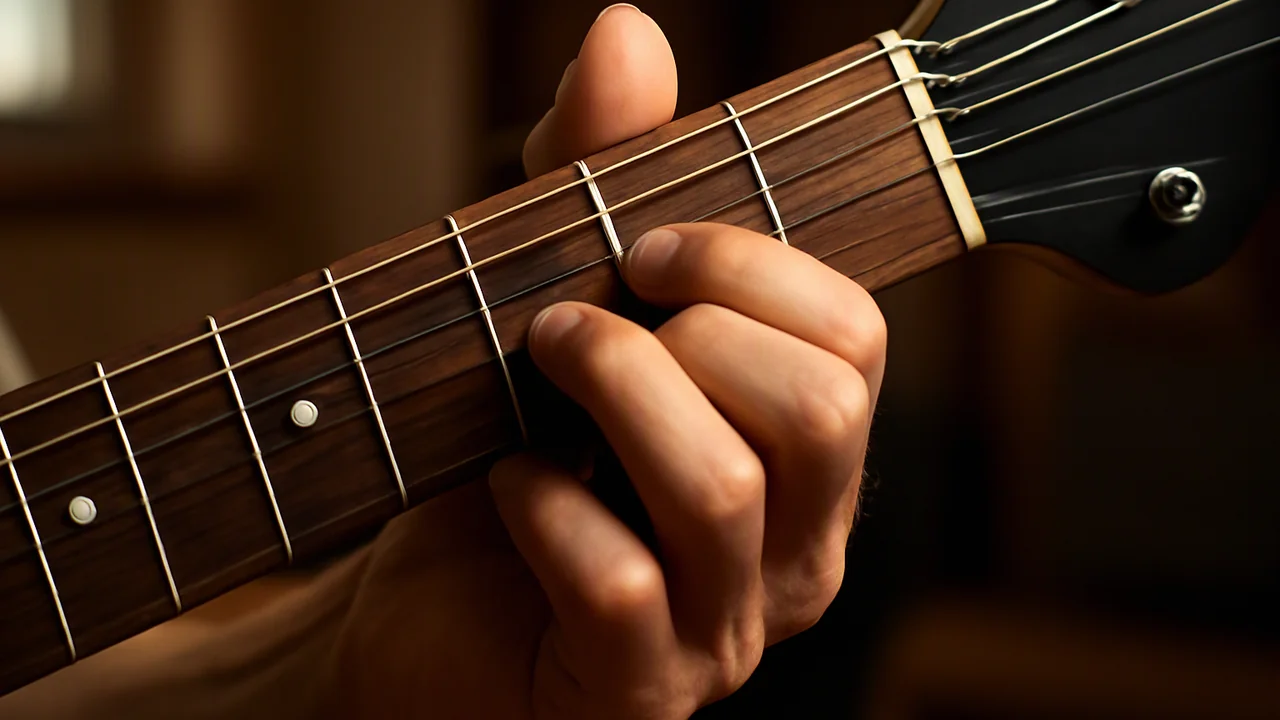
Do Now. Press any single string down at any fret and pluck it. Does it ring clearly, or buzz? What do you think causes a buzzing string?
What do you think causes a fretted string to buzz instead of ringing clearly?
Instruction ~10 min
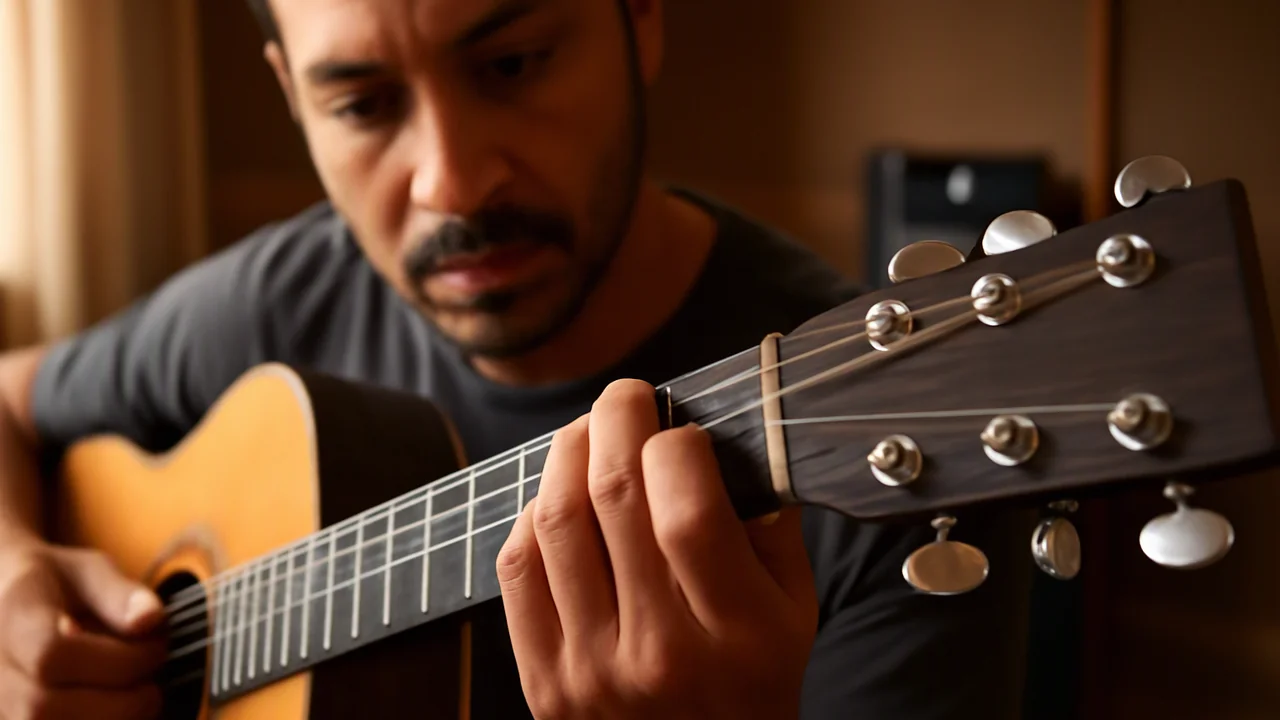
Thumb position. For a barre chord, your thumb sits behind the neck, roughly behind your first finger — not wrapped over the top. The thumb and the barring finger work as a clamp, squeezing the neck between them. A thumb that is too high (wrapped over) makes it almost impossible to apply even pressure across all six strings.
The barre finger itself. Lay your first finger flat, angled slightly so the side of the finger (not the soft pad) touches the strings — the side of the finger has harder, flatter bone just underneath the skin, and presses more evenly than the pad does. Place it just behind the fret wire, the same rule as any single fretted note: too far from the fret and it buzzes; on top of the fret and it also buzzes or mutes.
The buzz test. Do not assume a barre chord works just because it “feels” right. Pluck each of the six strings one at a time, slowly, and listen. A string that buzzes or goes dead tells you exactly where the problem is: not enough pressure from the barre finger at that string, or a finger from your other hand accidentally touching a string it shouldn’t. Fix one string at a time rather than re-trying the whole chord blindly.
Safety and pacing. A barre chord is genuinely hard on a beginner’s hand — it asks for more finger strength than any open chord. Some finger-tip soreness while calluses build is normal. Sharp pain in the wrist, thumb joint, or forearm is not, and is a sign to stop, rest, and come back later rather than “push through it.” Build barre-chord strength in short, repeated practice sessions rather than one long one.
Guided Exercises ~15 min
Check your understanding of correct technique before you keep practicing.
Independent Practice ~10 min
On your own: practice the E-shape barre at fret 1 (F major) for five minutes. Run the buzz test after every attempt and log which string gave you the most trouble.
Closure ~5 min
Exit ticket. What is one safety rule for practicing barre chords, and why does it matter?
What is one safety rule for practicing barre chords, and why does it matter?