1.1 One Shape, Every Key
A Barre Chord Performance Video
How can learning just two movable hand shapes let you play a song in almost any key on the guitar?
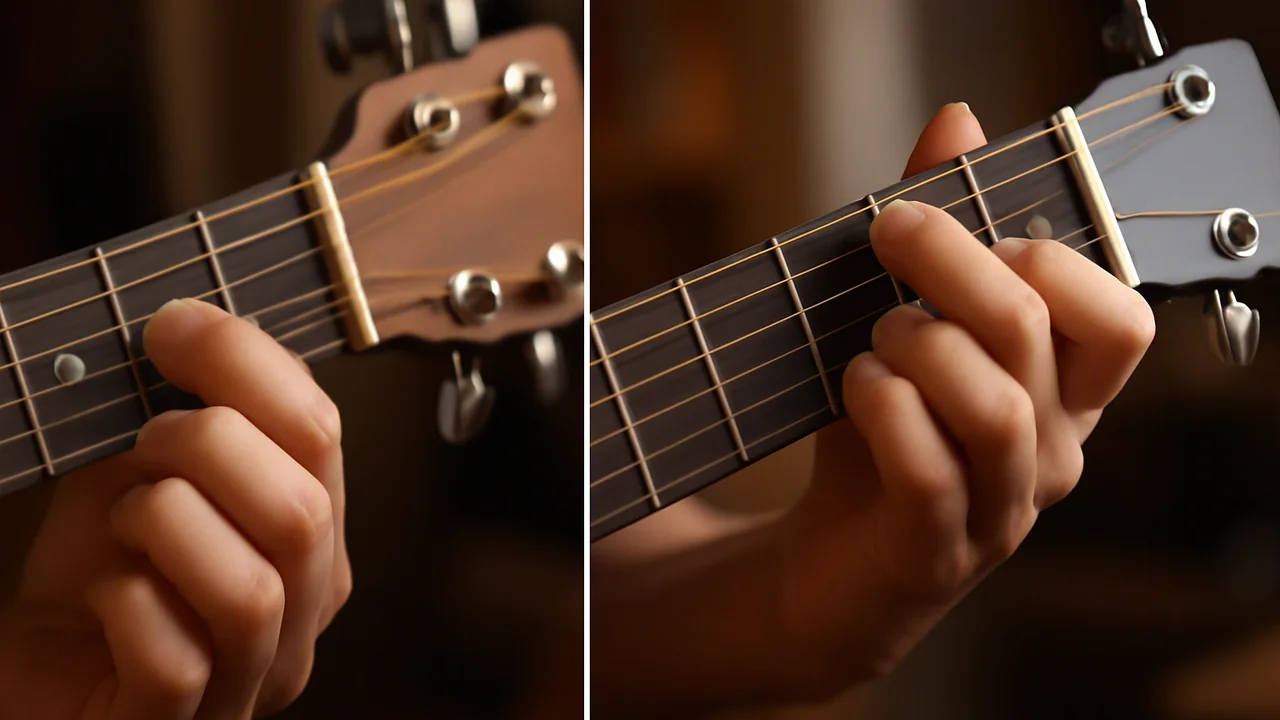
explain what a barre chord is and why a single movable shape can become many different chords.
Launch: The Driving Question
Warm-Up ~5 min
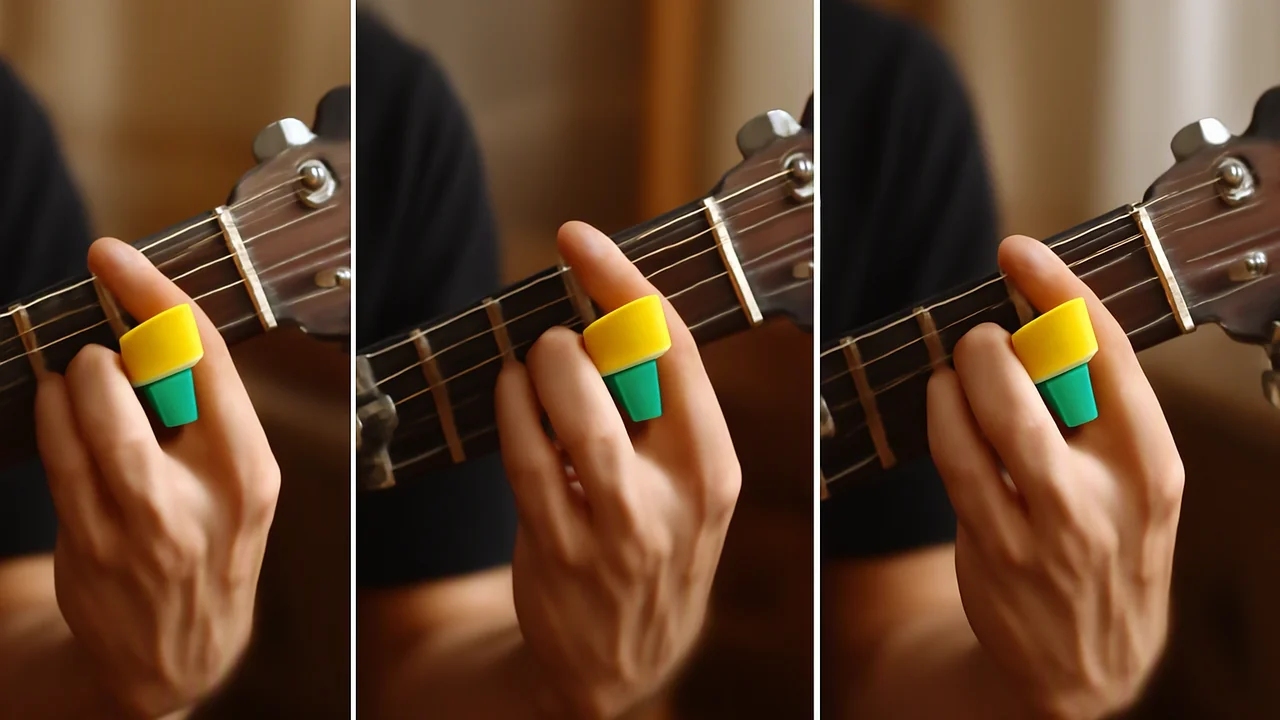
Do Now. An open E major chord only works in one place on the neck. Look at a chord chart for E major and A major. What looks similar about their shapes?
What looks similar between an open E major chord shape and an open A major chord shape?
Instruction ~10 min
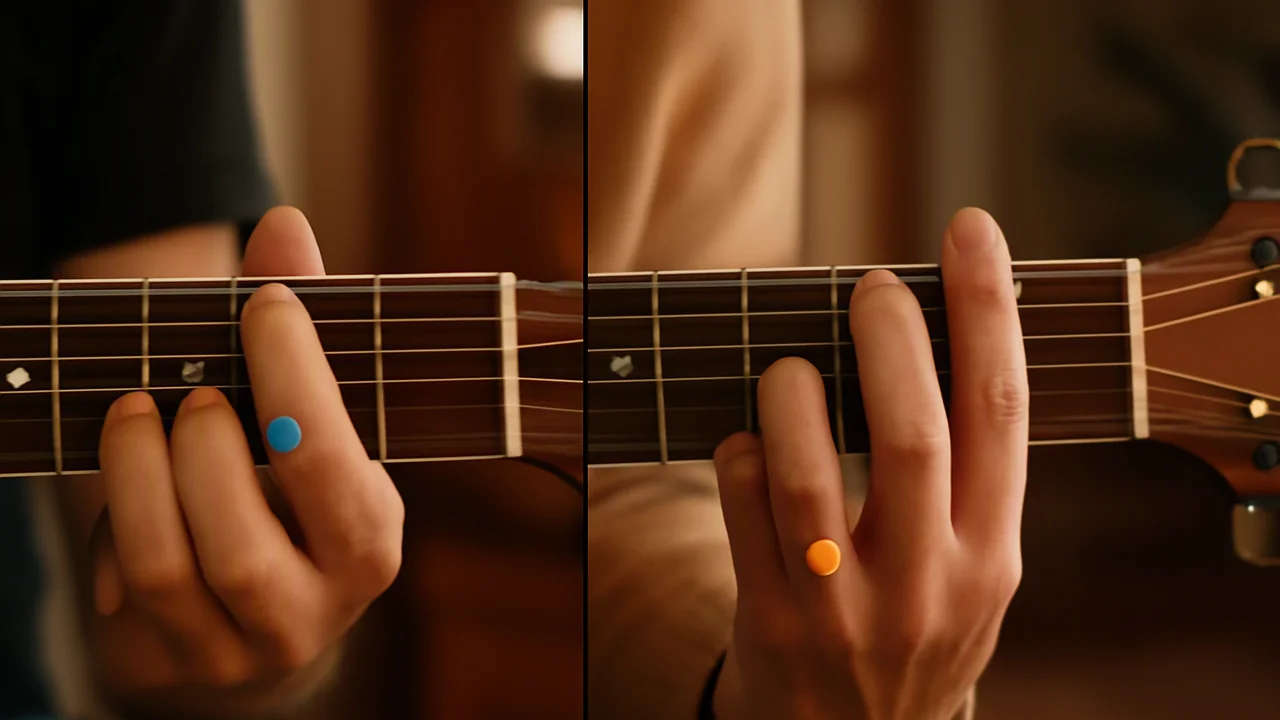
An open chord is stuck in one place. An open E major chord uses the guitar’s own nut (the ridge at the very top of the neck) as part of the shape. That means it can only ever be E major — there is nowhere else on the neck to move it and still have it sound right, because the open strings ringing are fixed notes.
A barre chord replaces the nut with your finger. If you lay your first finger flat across all six strings at any fret, it does the same job the nut does at the very top: it creates a new “zero fret.” Build the rest of an open E-shape chord with your other fingers just past that barre, and you get the exact same chord shape as open E — except now the whole shape can slide.
This is the trick. Slide that same E-shape barre up one fret, and it is no longer E major — it is F major. Slide it up two frets from E, and it is F# major. The shape never changes. Only its position does. The note under your first finger (the root note) names the chord.
There is a second movable shape built from open A major the same way, called the A-shape. Between the E-shape and the A-shape, a guitarist can play a major chord rooted on any string, in any key, anywhere on the neck — using only two shapes they already know from open chords.
Guided Exercises ~15 min
Before you touch the guitar, check your understanding of why this works.
Independent Practice ~10 min
On your own: using a blank fretboard diagram, mark where an E-shape barre chord would need to sit to become G major. Label the root note.
Closure ~5 min
Exit ticket. What is the root note, and how does it relate to a barre chord’s name?
What is the root note, and how does it relate to a barre chord's name?