1.2 A Young Officer, a Fort, and a Surrender
retell, in order, the real events of 1754 that started the French and Indian War.
Build Background & Skills
Warm-Up ~5 min
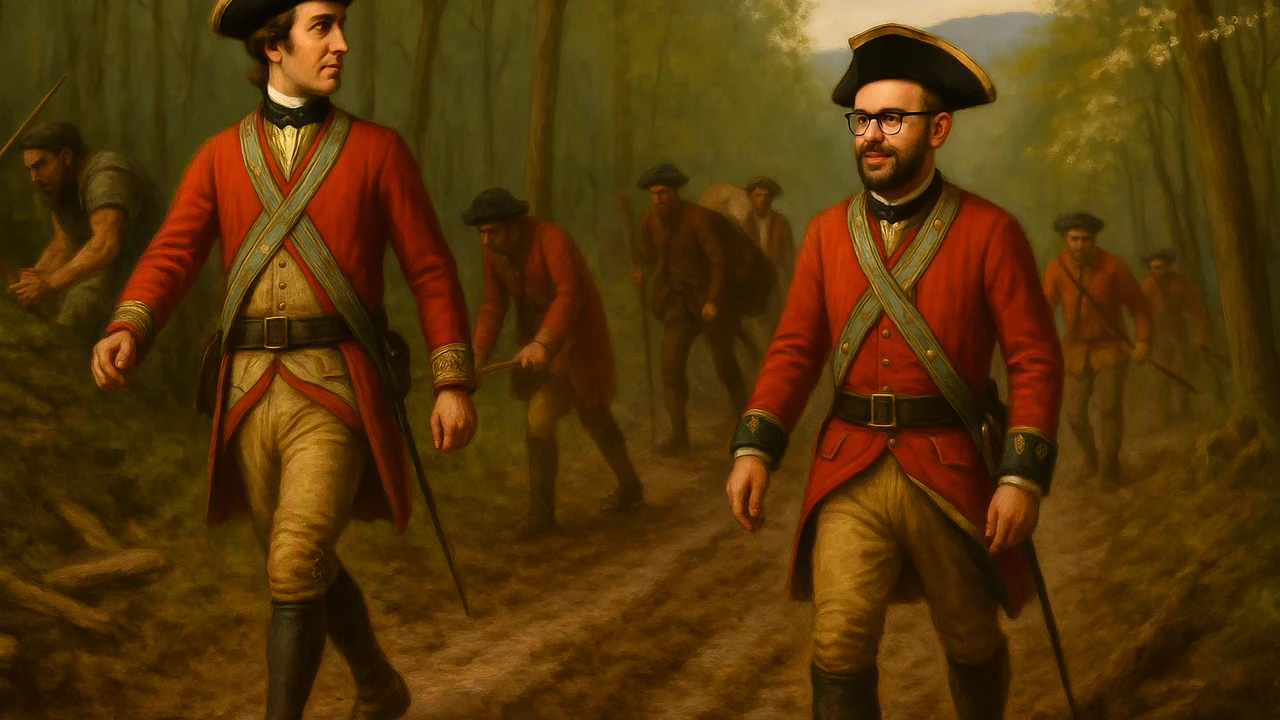
Do Now. George Washington was only 22 years old in 1754 — not yet President, just a young Virginia officer. What do you think a 22-year-old officer’s first big mission might feel like?
What do you think it would feel like to lead soldiers on your first big mission at age 22?
📖 Read for this lesson ~8 min
 The reading opens over the lesson; close it to come back to exactly where you were.
Instruction ~10 min
Let’s put the real events in order.
Spring 1754: Virginia sends young officer George Washington to build a road to the forks of the Ohio River and to tell the French to leave.
May 28, 1754: Washington, warned by his ally Tanacharison (the Half King), surprises a French scouting party at a place called Jumonville Glen. This short fight is often called the first shots of the war.
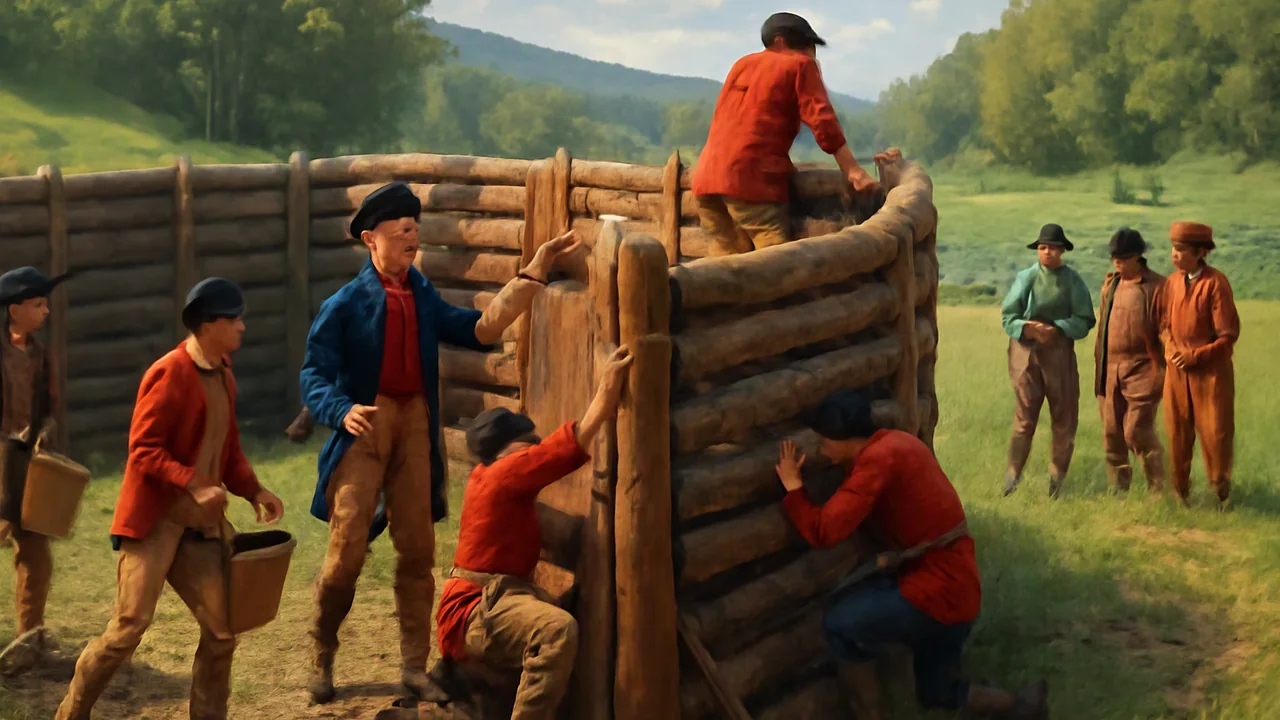
Early July 1754: Washington builds a round fort called Fort Necessity, expecting the French to return.
July 3, 1754: A larger French and Native allied force attacks Fort Necessity. Washington surrenders.
After 1754: The fighting spreads. Britain and its colonies, France, and different Native nations all end up taking sides, and the war does not end until 1763.
Guided Exercises ~15 min
Put these events in the right order, then check your understanding of what happened.
Independent Practice ~10 min
On your own: build a simple timeline with four boxes — label them Spring 1754, May 28 1754, Early July 1754, and July 3 1754 — and write what happened in each box.
Closure ~5 min
Exit ticket. Who was Tanacharison, and what did he do that mattered to this story?
Who was Tanacharison, and what did he do that mattered to this story?
Fort Necessity and the Start of the French and Indian War
National Park Service, Fort Necessity National Battlefield · Public domain
In the spring of 1754, a young Virginia officer named George Washington got his first big job. His orders were to build a road through the woods to the forks of the Ohio River — the spot that is now Pittsburgh, Pennsylvania.
But the French were already there, building their own fort. France said the land was theirs. Britain said it was theirs. Washington and his small army marched toward the forks anyway.
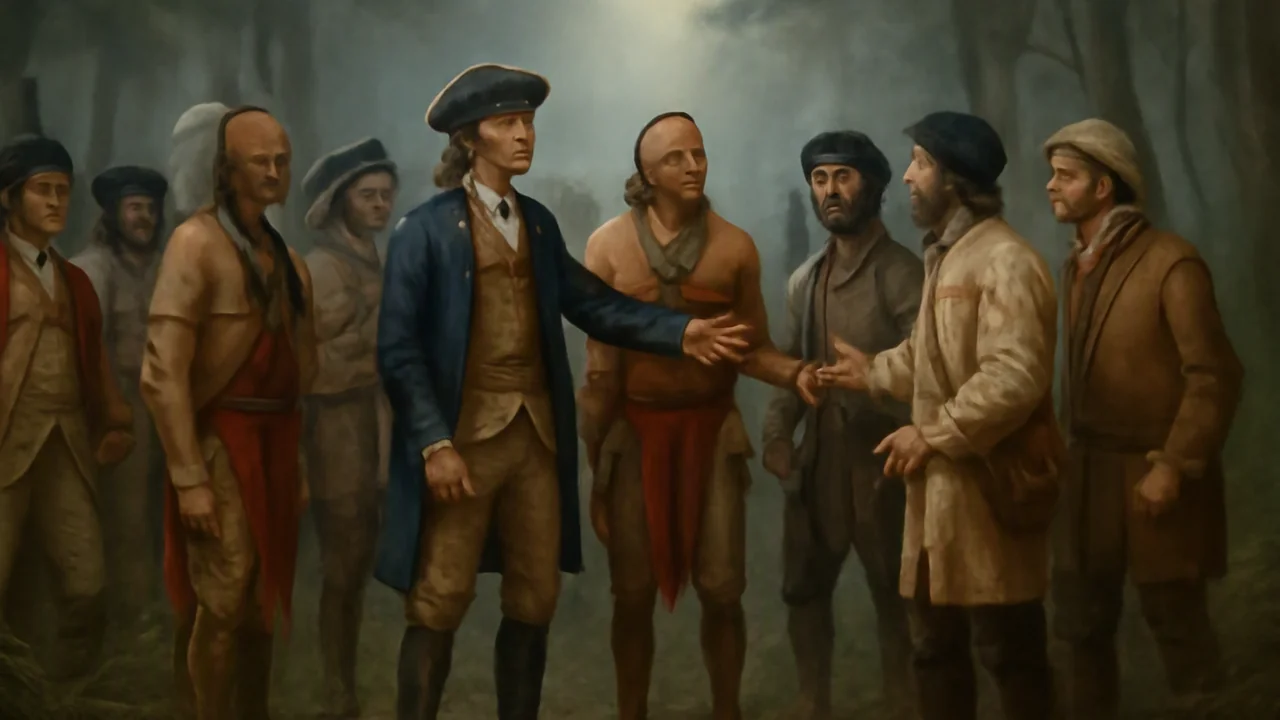
A Native leader named Tanacharison, also called the Half King, was an ally of Washington’s. He led the Mingo people, part of the Iroquois Confederacy. Tanacharison warned Washington that a nearby French group was planning to attack. On May 28, 1754, Washington’s soldiers and Tanacharison’s warriors surprised that French group in a quick fight called the Jumonville Glen skirmish.
Washington knew the French would come back for revenge. He built a round, open fort in a meadow and named it Fort Necessity. On July 3, 1754, a much larger French force attacked. After a long day of fighting in the rain, Washington had to surrender — the only time in his whole life that he ever surrendered to an enemy.
This small battle in the Pennsylvania woods was the spark. It grew into a war between Britain and France that spread all the way to Europe, Africa, and Asia.
In their own words
“The confrontation at Fort Necessity in the summer of 1754 was the prelude to the war fought by England and France for control of the North American continent.”
“It was the only time he ever surrendered to an enemy.”
— National Park Service, Fort Necessity National Battlefield
Source: National Park Service, Fort Necessity National Battlefield (nps.gov)