1.14 Ideate: Brainstorming the No-Power Cooler
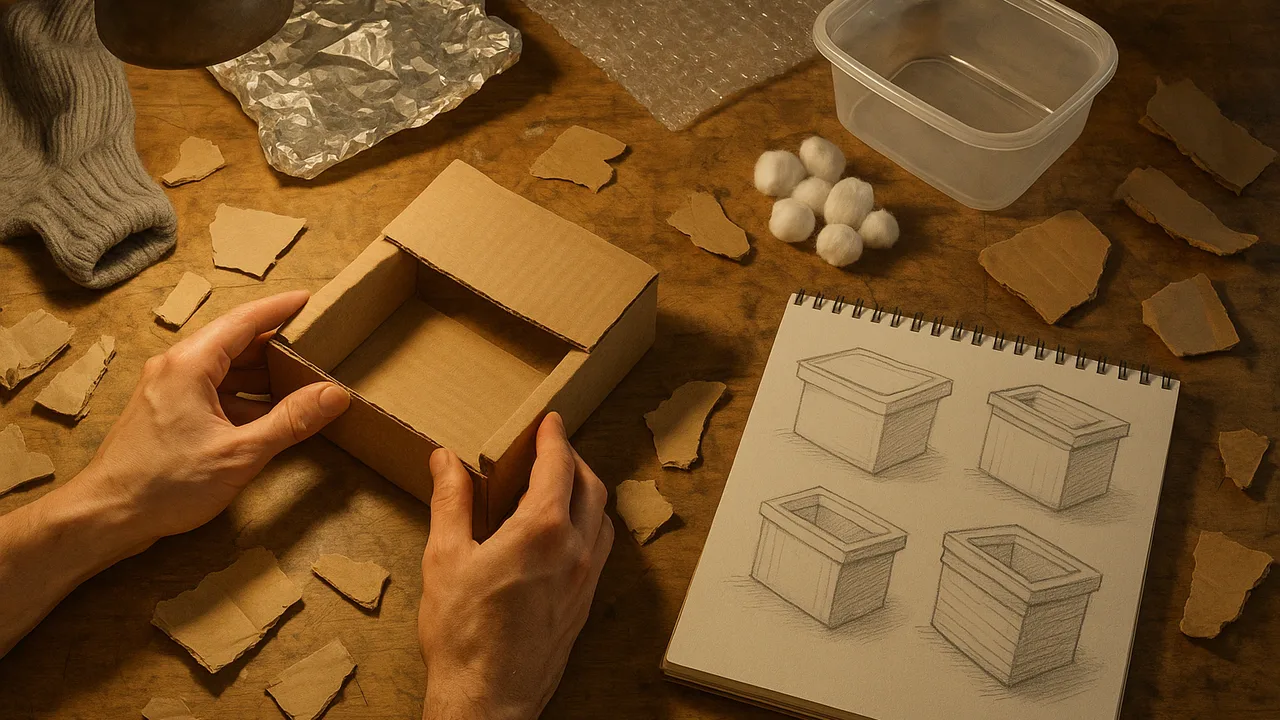
brainstorm at least three cooler designs grounded in particle and energy science and check each against our criteria and constraints.
- I can define the criteria for a solution that meet the needs of the people or groups affected by the problem.
- I can explain who the solution is meant to help and use criteria to compare different solutions, including using numbers when needed.
- I can define the constraints for a solution, including time, materials, costs, and scientific or other important issues.
- I can explain how the needs and wants of people involved, safety, and effects on others limit possible solutions.
- I can analyze how solutions or not solving the problem could negatively affect the environment.
- I can identify the system where the problem exists, including its main parts, how they relate, and what is inside or outside the system.
- I can explain who needs the problem solved, what needs must be met, and which scientific issues are important.
- I can analyze how possible solutions might affect people and the environment, and decide which issues and parts of the system matter most.
Phase 3: Make Sense
Warm-Up ~5 min
Do Now. Look back at our design brief and the class system map. Circle the one criterion you think will be hardest to meet. Then make a prediction.
Which idea uses the most science we have learned?
Instruction ~10 min
Ideate means many ideas first. Engineers generate lots of ideas before judging them. Today you sketch quietly, then build on teammates’ ideas with “Yes, and…” Every idea must name the science that makes it work.
Science menu.
- Insulation: trapped gas in foam, bubble wrap or cloth slows energy flow (1.06, 1.12).
- Melting: ice absorbs energy at 0°C while it melts (1.05, 1.11).
- Reflection: a shiny outer layer can reflect sunlight (1.06).
- Less air exchange: a tight lid keeps warm air out (1.02).
Worked example 1: a science-grounded idea. Malik’s team sketched a box inside a box with crumpled bubble wrap between the walls. They added a foil outer skin and two frozen water bottles. Their notes: “Trapped air slows energy in. Foil reflects sunlight. Melting ice absorbs what gets through, and the bottles do not leak.”
Worked example 2: checking an idea against the brief. Ava suggested a giant bag of loose ice. It might keep food cold, but it would leak on the bus and weigh far more than 5 kg. It fails two constraints. Her team kept the science, melting ice, but switched to sealed frozen bottles.
| Idea | Sketch | Science it uses | Criteria it should meet | Constraints it might break | Effects on people or environment |
|---|---|---|---|---|---|
| Idea 1 | |||||
| Idea 2 | |||||
| Idea 3 |
Not yet! Do not pick a winner today. In the Build phase, we compare these ideas fairly, prototype and test them.
Guided Exercises ~15 min
Warm up your thinking with these cards, then sketch your ideas.
Independent Practice ~10 min
Complete the idea table for your team.
Sketch three different cooler ideas. For each one, name the science it uses, the criteria it should meet, any constraint it might break and one effect on people or the environment.
How confident are you that you can I can generate design ideas grounded in science and check them against criteria and constraints.
Closure ~5 min
We have a science-backed idea bank. Next, the Build phase: compare our ideas fairly, build a prototype and test it. First, a 3DX field trip into an ice cube.
Exit ticket: pick your strongest idea. Explain how it meets two criteria and stays within two constraints, using particle or energy science.
Teacher notes
Materials: the class design brief and system map, idea table, sticky notes, sketch paper, sample materials to handle (foam, bubble wrap, cloth, foil, cardboard, plastic bottles).
Setup: run a 5-minute silent sketch, then a 6-minute “Yes, and” round. Teams keep all three ideas; part 2 compares them systematically (MS-ETS1-2).
Listen for: ideas with no science named; ideas using dry ice, salt baths that would leak, or electricity. Redirect to the brief. Salted ice packs can get colder than 0°C; accept as a stretch idea if sealed, but keep the focus on insulation and melting.
Support / stretch: give a menu of cooler parts with the science each uses. Stretch: add a feature for a student with a food allergy whose lunch must stay separate.