2.02 Project Brief and Wonder Board: Restore the Balance
Restore the Balance
How can we design a solution that reduces a human impact on an ecosystem and helps it regain stability?
The mystery: Along a stretch of temperate Pacific coast, dense kelp forests turned into bare reefs carpeted with purple sea urchins after predator loss and a marine heat wave, and many reefs stayed that way after the water cooled.
Questions we will figure out together in this unit:
- Can the kelp come back if divers remove the urchins?
- Would bringing back sea otters fix the barren, and how would fishers feel?
- How salty can an estuary get before its fish disappear?
- Why does diverting river water affect fish so far downstream?
- Why do fires burn hotter now than they used to?
- Can a computer model tell us whether thinning a forest will work?
- Who pays for restoration, and who decides?
- How do we know a solution will not cause a new problem?
explain the restoration council’s challenge, our driving question and need-to-knows, and identify how specific human activities harm biodiversity in three ecosystems.
- I can design a solution that reduces the negative effects of human activities, such as overpopulation, overexploitation, habitat destruction, pollution, invasive species, and climate change, on the environment and biodiversity.
- I can use scientific knowledge about the factors affecting changes and stability in biodiversity to inform my solution.
- I can identify the claims, evidence, and reasoning given in materials about how ecosystems respond to changes.
Phase 1: Spark
Warm-Up ~5 min
Do Now. Read the call for proposals below. Underline what the council will fund and circle what it will NOT fund.
“The Regional Ecosystem Restoration Council invites student design teams to propose one solution that reduces a human impact on biodiversity in a kelp-forest coast, a river estuary or a fire-adapted forest. Proposals must define the problem with evidence, compare at least three solutions, show test evidence from a prototype or simulation, and weigh cost, safety, reliability and effects on local communities. We will not fund ideas without test evidence.”
Which proposal would the council reject?
Instruction ~10 min
Meet the client. A regional ecosystem restoration council funds projects that protect biodiversity. Its panel includes a marine scientist, a forester, a water-agency engineer, a commercial fisher, a farmer and a representative of local Indigenous nations whose knowledge and rights are part of these places.
Driving question. How can we design a solution that reduces a human impact on an ecosystem and helps it regain stability?
Three ecosystems. Each team chooses one.
- A kelp-forest coast turned to urchin barren after predator loss and a marine heat wave.
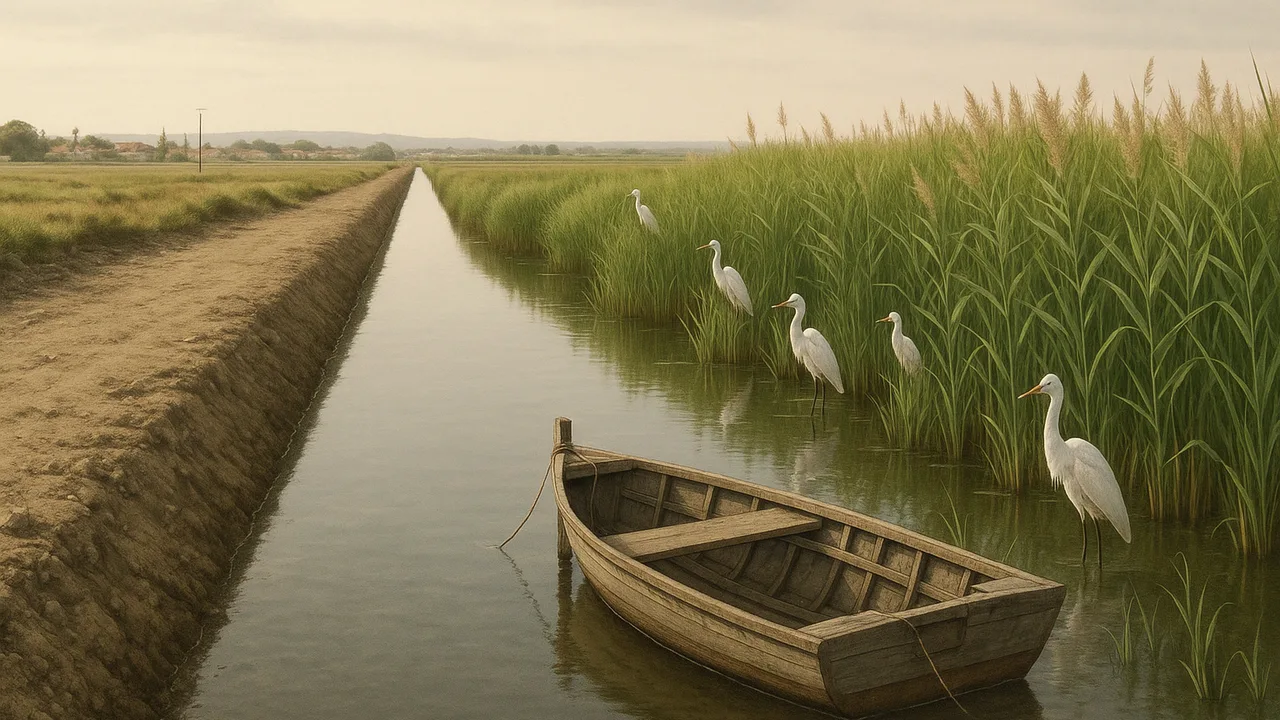
- A river estuary, where fresh river water meets the sea, whose native fish are declining as water is diverted, marshes are drained and invasive species spread.
- A fire-adapted conifer forest, where a century of putting out every fire has let fuel build up, so fires now burn hotter.
Human activities that reduce biodiversity. HS-LS2-7 names six big ones: overpopulation (growing demand for land and water), overexploitation (taking organisms faster than they reproduce), habitat destruction, pollution, invasive species and climate change.
Worked example 1: matching activity to ecosystem. In the estuary, draining marshes for farms is habitat destruction; a clam that arrived in ships’ ballast water is an invasive species; pumping river water away for cities and farms changes the habitat too. One ecosystem, several activities, acting together.
Worked example 2: reading a claim critically. A website claims: “Kelp forests disappeared because of warm water.” Claim: warm water. Evidence offered: the heat wave happened at the same time. Missing reasoning: why did barrens persist after the water cooled? A complete argument must also explain the loss of sea stars. Spotting the claim, evidence and reasoning in what you read is part of HS-LS2-6.
Teams and roles. Teams of three or four with rotating roles: Ecologist (the science), Engineer (prototype and simulation), Economist (costs and trade-offs) and Community Liaison (people affected, and the pitch).
Guided Exercises ~15 min
Sort, match and question with your team.
Independent Practice ~10 min
Team charter and Wonder Board.
Write your team charter: chosen ecosystem, first roles, how you will decide, and one ground rule for respectful disagreement.
Add three questions to the Wonder Board: one about why your ecosystem changed, one about a possible solution, and one about who would be affected.
Closure ~5 min
We have a client and a challenge. Next: an investigation of how a changing condition affects a population.
Exit ticket: name the human activity you think matters most in your ecosystem, and one piece of evidence you would need to be sure.
Teacher notes
Materials: the call for proposals (printed), team role cards, the Wonder Board, three one-page ecosystem fact sheets (generic).
Setup: the council is fictional; a staff member can play the chair. Aim for a mix of ecosystems across teams so the showcase compares approaches.
Listen for: blaming one group of people; framing nature and people as opposites. Redirect to “what does the evidence say about each cause?”
Support / stretch: give an impact-matching card sort. Stretch: find a real restoration project for one ecosystem type and identify its claim, evidence and reasoning.