How does something invisible to the naked eye hold the blueprint for all life, and what does it mean for us to ‘read’ this code in metagenomics?
Inside living things is an information molecule called DNA. In this course, DNA is the evidence we collect, prepare, and read. Before we dive into collecting and analyzing DNA from environmental samples, it’s essential to understand what DNA is and how it functions as the fundamental code of life. This lesson will equip you with the foundational knowledge of DNA’s structure and its role as genetic information.
Learning Outcomes
By the end of this lesson, you will be able to:
- Describe DNA as information-carrying material.
- Identify the double helix structure conceptually.
- Explain base pairing.
- Distinguish DNA from genomic DNA.
What is DNA?
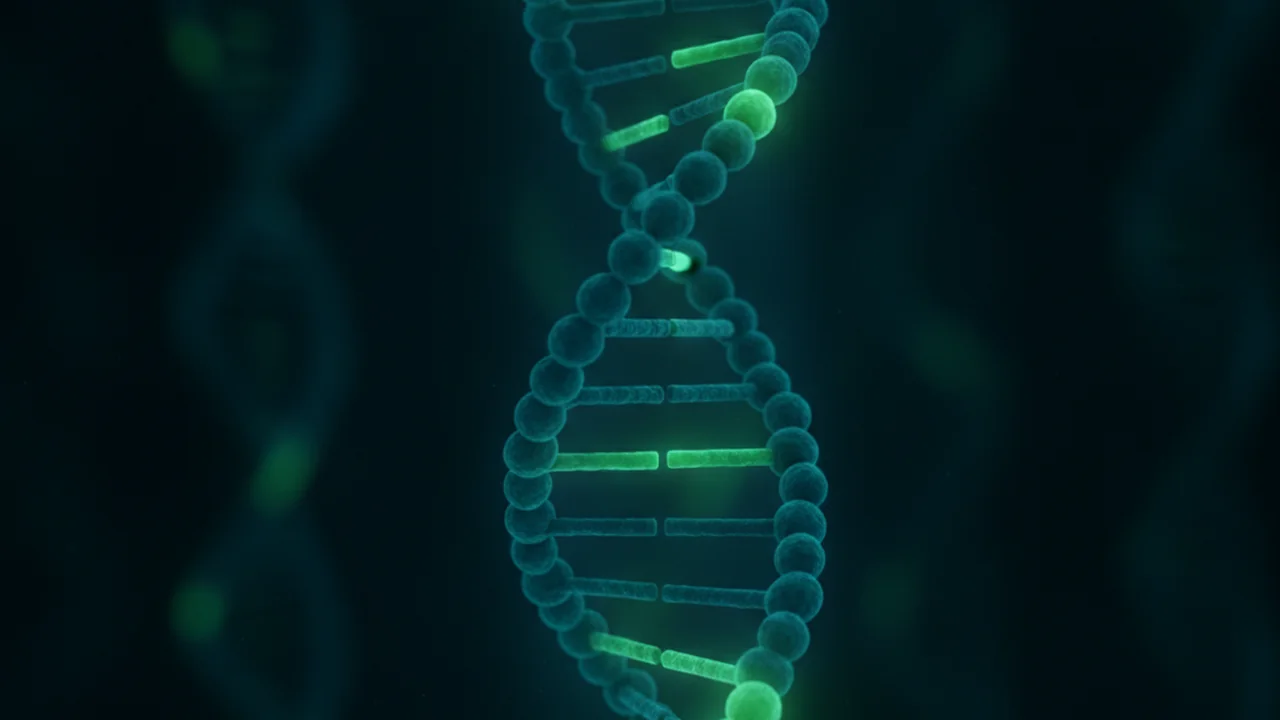
The molecule that carries genetic information for the development and functioning of an organism.
DNA (Deoxyribonucleic acid) is the molecule that carries genetic information for the development and functioning of an organism. DNA is made of two linked strands that wind around each other to form a double helix. Each strand has a backbone made of alternating sugar (deoxyribose) and phosphate groups.
Consider the immense complexity of an organism. How incredible is it that all the instructions for its development and function are encoded within such a tiny molecule?
Base Pairing
Each sugar carries one of four bases: adenine (A), cytosine (C), guanine (G), or thymine (T).
- Adenine bonds with Thymine (A-T)
- Cytosine bonds with Guanine (C-G)
The sequence of bases encodes biological information, including instructions for making proteins and RNA.
The specific pairing of A with T and C with G is known as Chargaff’s rules. This crucial discovery helped Watson and Crick deduce the double helix structure of DNA, highlighting the complementary nature of the two strands.
Imagine you have a single strand of DNA with the following sequence. Your task is to determine the sequence of its complementary strand.
- Given sequence: A-T-T-C-G-A-C-G
- Based on the base pairing rules (A-T, C-G), write down the complementary sequence.
- Check your answer: Did you get T-A-A-G-C-T-G-C?
Want to go deeper? The Chemistry of Base Pairing
The specificity of A-T and C-G base pairing is due to the formation of hydrogen bonds. Adenine and thymine form two hydrogen bonds, while cytosine and guanine form three hydrogen bonds. This difference in bonding contributes to the stability of the double helix and ensures the accurate replication of genetic information.
- DNA is the fundamental information-carrying molecule of life.
- It has a double helix structure with a sugar-phosphate backbone.
- Bases (A, T, C, G) pair specifically: A with T, and C with G.
What is Genomic DNA?
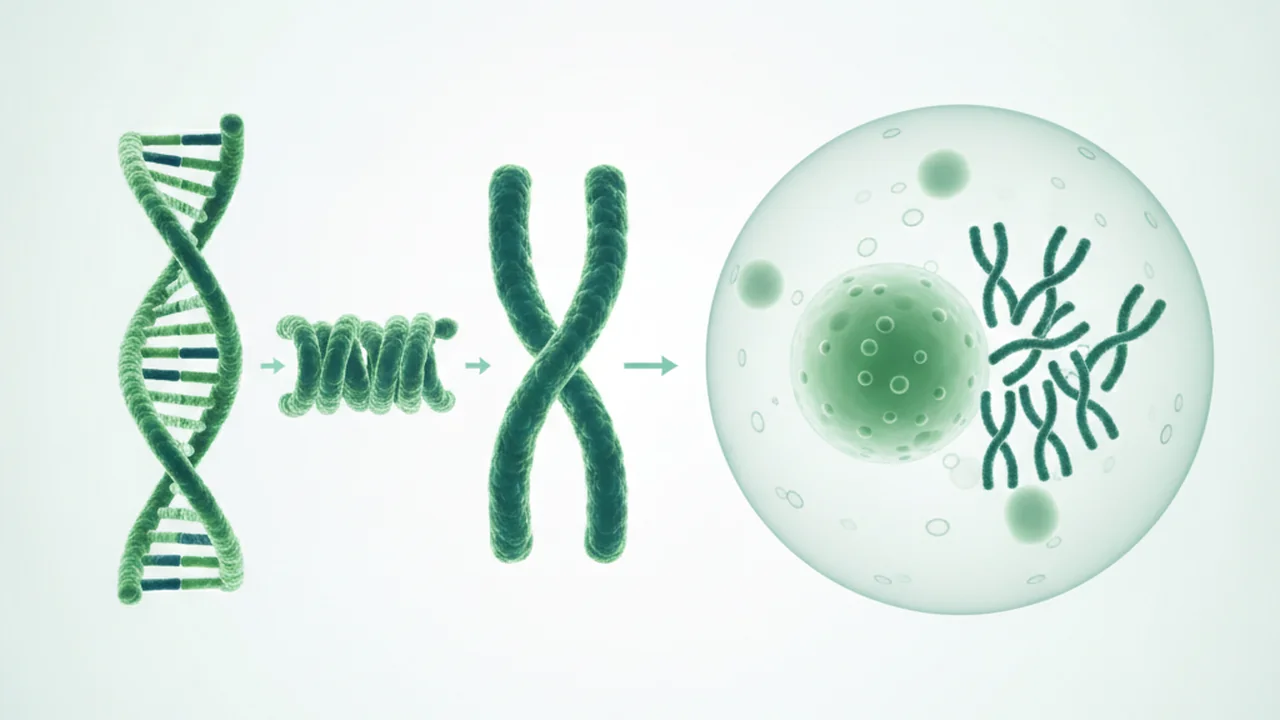
The entire set of DNA instructions found in a cell.
The genome is the entire set of DNA instructions found in a cell. In humans, the genome consists of 23 pairs of chromosomes in the cell nucleus, plus a small chromosome in the mitochondria. A genome contains all information needed for an individual to develop and function.
DNA and Genomic DNA are interchangeable terms for the same thing.
While all genomic DNA is DNA, not all DNA is genomic DNA. Genomic DNA refers to the complete collection of an organism’s DNA, organized into chromosomes, containing all the instructions for its life. DNA, more broadly, refers to the molecule itself.
Understanding genomic DNA is crucial in fields like personalized medicine, forensics, and evolutionary biology. For instance, in metagenomics, we sequence the genomic DNA from entire communities of microbes in an environmental sample to understand their collective functions and interactions.
The genome is the entire set of DNA instructions found in a cell.
How does the concept of a “genome” elevate your understanding of DNA’s role beyond just a simple molecule?
Which statement best describes the primary role of DNA?
In DNA, which of the following base pairings is correct?
Reflect on the implications of knowing that all the instructions for an organism’s development and function are encoded in its genomic DNA. How might this knowledge influence your perspective on life, heredity, or disease?
DNA is the fundamental information-carrying molecule of life, characterized by its double helix structure and specific base pairing, encoding all instructions for an organism, while genomic DNA represents the complete, organized collection of this vital genetic code within a cell.
The Shift
- DNA is not just a complex molecule; it’s the universal blueprint of life, carrying genetic information in a highly organized double helix structure.
- The precise base pairing (A-T, C-G) is fundamental to DNA’s ability to accurately store and transmit biological information.
- Understanding the distinction between DNA and genomic DNA clarifies that the genome is the complete, comprehensive set of these instructions, crucial for fully comprehending an organism’s biology.